



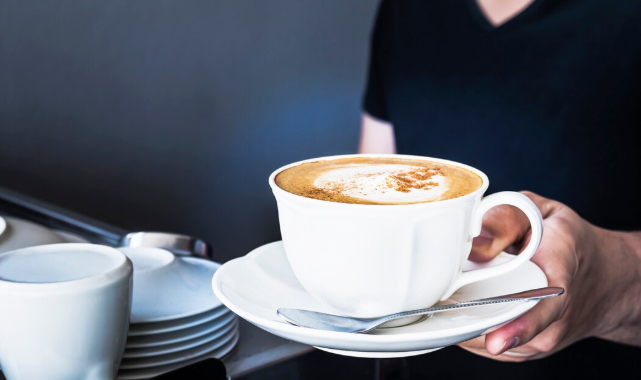
Al Quoz is not what most people think of as Dubai. This place is devoid of shiny skyscrapers, opera-style fountains, and hotel lobby chandeliers the size of tiny airplanes. It’s an industrial area with delivery trucks, low-rise warehouses, and the odd art gallery nestled between loading docks. Nevertheless, a simple café called Julith is charging $980 for a single cup of coffee inside one of those warehouses. Four hundred of them were to be sold. It’s worth pausing to consider that detail.
The cup in question is made from Panamanian Geisha beans, which are so uncommon and highly traded among coffee experts that talking about their price per pound makes specialty roasters in Tokyo or Brooklyn go a little crazy. The flavor is described by Serkan Sagsoz, who co-founded Julith after operating a café in Istanbul: white jasmine, bergamot, orange, with hints of apricot and peach, which sound more like perfume than breakfast. He described it to reporters as “delicate and sweet, like honey.” It may depend on one’s palate and expectations as to whether a cup of coffee can actually provide all of that. However, in Dubai, what you’re buying includes the expectation itself.
| Field | Details |
|---|---|
| First Record Holder | Roasters — Emirati homegrown coffee chain; flagship at Boulevard Downtown Dubai |
| Roasters’ Record Price | AED 2,500 (approx. USD $680 / £500) — Guinness World Record set September 13, 2025 |
| Roasters’ Founder & CEO | Konstantin Harbuz — co-founder; brand has 11 branches across the UAE |
| Coffee Bean Used (Roasters) | Panama Esmeralda Geisha — among the rarest and most expensive beans on earth; known for floral and tropical fruit notes |
| Brewing Method | Hand-poured V60 dripper with temperature-controlled kettle; served in handcrafted Japanese Edo Kiriko crystal glass |
| Accompaniments | Tiramisu, chocolate ice cream, and specialty chocolate — all infused with Geisha beans |
| Record Broken By | Julith Café — located in Al Quoz industrial district, Dubai; co-founded by Serkan Sagsoz (formerly ran a café in Turkey) |
| Julith Café Price | AED 3,600 (approx. USD $980) — announced November 1, 2025 |
| Cups Planned for Sale | Approximately 400 cups of the $980 brew |
| Flavor Profile (Julith) | Jasmine, orange, bergamot, apricot, peach — described as “like honey, delicate and sweet” |
| Dubai Coffee Industry Growth | Coffee business registrations spiked nearly 150% in one year — 171 new applications filed |
| Dubai’s Luxury Context | Home to world’s tallest building (Burj Khalifa), indoor ski slope (Mall of the Emirates), and palm-shaped artificial island (Palm Jumeirah) |
| Location of Al Quoz District | Industrial neighborhood in Dubai that has evolved into a specialty coffee and arts enclave |
Julith’s record wasn’t delivered in a vacuum. Six weeks prior, in September 2025, at its flagship location on Boulevard Downtown Dubai, a locally owned Emirati chain called Roasters had set the Guinness World Record for the most expensive cup of coffee at AED 2,500, or about $680. Tableside was where the record ceremony took place. Using a temperature-controlled kettle and a V60 dripper, a dedicated barista made the brew. It was then served in a handcrafted Japanese Edo Kiriko crystal glass, which has geometric patterns carved into the surface that catch light at odd angles. There were cards with flavor notes.
The same rare Geisha beans were used to make the tiramisu, chocolate ice cream, and specialty chocolate piece that accompanied the coffee. The CEO of Roasters, Konstantin Harbuz, called it a celebration of “Dubai’s growing reputation as a destination for exceptional coffee experiences.” Julith had taken the record in less than six weeks. It seems that records are not kept in secret in Dubai.
The speed at which all of this is happening is revealing. In just two months, the city produced two incredibly costly cups of coffee, each more costly than the previous, garnering international attention and at least one resident being quoted as saying something along the lines of “it’s shocking, but then again, it’s Dubai.” The reflexive local shrug is a type of cultural data point in and of itself. A four-figure cup of coffee falls somewhere between outrageous and expected in a city that built a palm-shaped island in the Persian Gulf primarily for the aesthetic pleasure of aerial photographs and has an indoor ski slope inside a shopping mall. People have learned to modify their baselines in accordance with the ambition scale.
The deeper narrative, however, is more about the state of Dubai’s coffee culture overall than it is about specific cups. In just one year, there were 171 new applications for coffee businesses in the emirate, a nearly 150% increase. That is a structural change in the city’s perception of café culture, specialty beans, and what a coffee shop can be, not a luxury trend. In the past, Dubai has been perceived as a transit city—a skyline rather than a neighborhood, a place people traveled through rather than settled in. A true local food culture with its own identity and aspirations, even if those aspirations occasionally find their way into the Guinness Book of World Records, appears to be emerging as a result of the coffee boom.
The record-breaking cups might be more of a marketing gimmick than a true culinary statement. The cynic’s interpretation is easy to construct: the $980 price tag is more about what the number conveys than what’s in the cup, and rare beans plus outstanding service plus a well-known city equals worldwide press coverage. There is some validity to that. However, it’s also important to note that serious coffee experts who aren’t particularly interested in Guinness records have long praised the Geisha bean from Panama’s Esmeralda farm for its exceptional auction prices. Dubai simply put it in a crystal glass and added the tiramisu; it didn’t create the value.
As you watch this specific scene play out, you get the impression that the coffee story is revealing more about Dubai’s aspirations. The tallest building, biggest shopping center, and most costly hotel suite are just a few examples of the city’s superlatives; it’s also a place with its own cultural character and reasons to stay rather than just visit. It’s really unclear if a $980 cup of coffee will make a difference on that project. However, it’s obvious that someone is attempting to learn more somewhere in Al Quoz, between the walls of the warehouse, the V60 drippers, and the meticulously printed flavor note cards.
