



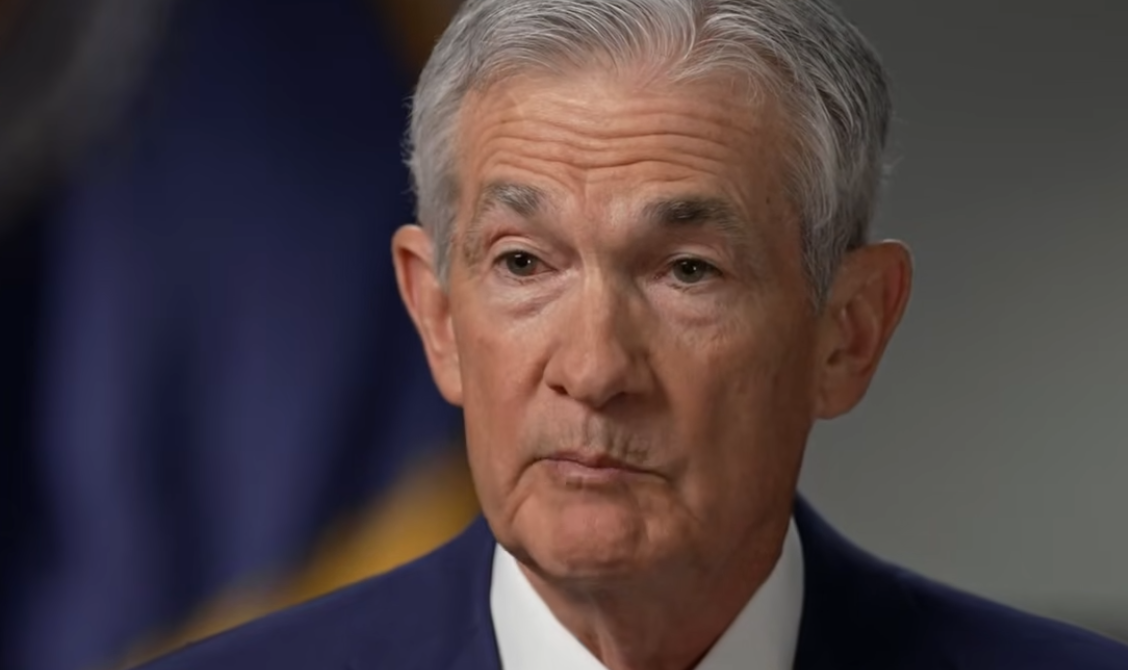
Powell doesn’t get scared. That’s always been a part of his style—careful with words in a way that can only come from someone who knows how to make markets hang on every syllable. Thus, when he spoke at his last press conference as head of the Federal Reserve and said that the economic outlook was “highly uncertain,” it wasn’t a casual statement. It was pretty much the only alarm Powell would ever set off in public. It looks like markets weren’t paying attention.
Since late 2023, this is the longest winning streak for the S&P 500. It has now been going up for eight weeks in a row. After that came the Nasdaq. From the outside, it looks like confidence. People on the trading floors and in the financial media think that the worst is over. They think that the sharp drop after U.S. military operations in Iran was just a scare and that the rally will start up again soon. Investors think everything turned out well in the end. According to Powell’s last words, this is not the case.
It’s not an abstract worry. The price of oil is still about 60% higher than it was at the beginning of the year. No, that’s not a footnote; that’s a cost increase that affects almost everything. It costs more to ship things. It costs more to make things. Putting gas in the car on the way to work earns more money every week. When the cost of energy stays high for a long time, it doesn’t just stay at the pump. They move through the supply chain slowly and steadily.
That is exactly what the index of producer prices shows. In April, PPI inflation hit 6%, which hasn’t happened since 2022. The producers don’t keep paying those costs; they pass them on to the consumers. And since PPI tends to be a few months ahead of CPI, the Federal Reserve’s own tool for making predictions in Cleveland now says that consumer inflation will be close to 6.8% by the second quarter. No one on Wall Street seems excited to talk about that prediction.
Powell talked about this directly. The speaker told the crowd that tariffs and high energy costs had already driven inflation to a level not seen in many years. In April, the CPI was 3.8%, which was the highest reading since April 2023. He said that rate cuts would not happen for a while. He didn’t make it kinder.
The picture of rate expectations has changed a lot. When the year began, traders thought that the rate would drop by at least half a point by December. That situation is now pretty much out of the question. The FedWatch tool from CME Group shows that markets now expect at least one rate hike before the end of the year. That’s a big change, the kind that market history shows usually comes in slowly rather than all at once, until one morning it doesn’t.
In all of this, it’s hard not to notice what’s going on with Treasury yields. The 30-year bond’s yield just hit 5.18%, which is the highest it has been since July 2007. Take a break during that year. It’s been twelve months since 30-year Treasuries paid that much. In that time, the S&P 500 dropped more than 20% and the Nasdaq fell 17%. That’s not fate—history rhymes, but it doesn’t always repeat—but it does bring up a question that investors don’t want to ask: when do risk-free bonds become really appealing enough to make people want to move their money out of stocks?
Stocks don’t like that math when yields are high. It costs businesses more to borrow money. Growth slows down. People are spending less on credit-sensitive goods. The whole framework for judging why stock prices are high starts to look less stable the longer rates stay high. It’s possible that the market is right and inflation goes down faster than people thought. It’s also possible that eight weeks of gains have made it easy to ignore what a cautious and measured central banker said as he walked out the door.
