



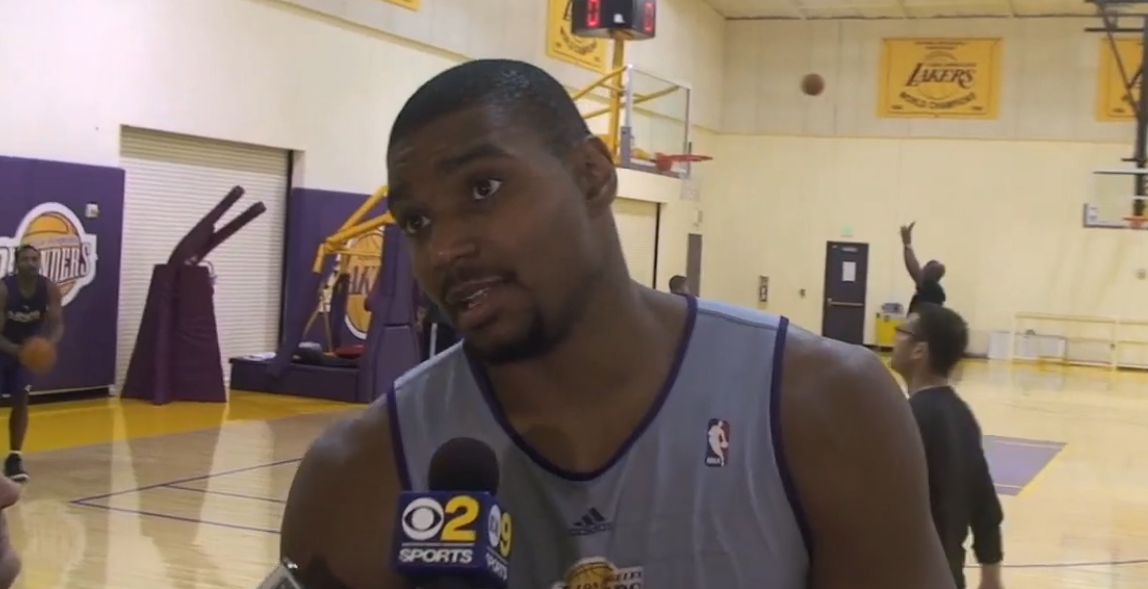
People remember Andrew Bynum‘s story in a way that is almost sad. There was a seven-foot center from Plainsboro, New Jersey, who didn’t go to college at all and walked into the NBA at age 17. He made the whole league take notice. He was not meant to be ready. Not many teens are. However, seeing how well he played against Shaquille O’Neal as a rookie made it clear that this kid was going to be very good.
He was, for a while, for sure. Along with being named an All-Star in 2012, Bynum won two NBA titles with the Los Angeles Lakers in 2009 and 2010. He was also named to the All-NBA Team. In October 2008, he signed a new deal worth $58 million over four years. That’s a lot of money, even by NBA standards. By 2012, his Philadelphia 76ers salary had gone up to about $16.89 million a year. This is the kind of number that sticks with a player long after the game is over.
Andrew Bynum is thought to be worth about $45 million right now. That number comes from years of high-value contracts, the chance to get a lot of endorsements, and a career that, despite some disappointing endings, was truly great on the court when it was at its best. Perhaps that number would have looked very different in a different setting. Bynum may have been one of the best centers in basketball when he was fully healthy and playing for a good team for a long time. His earning potential was much higher at that point in his career.
Of course, you can’t separate the injuries from the money. Knee problems held him back at almost every turn: a partially dislocated kneecap in 2008, a torn MCL in 2009, and then ongoing problems that kept him out of action for the whole 2012–13 season with Philadelphia after the big trade that sent him there from the Lakers. Bynum was supposed to start over in Philadelphia after that four-team deal that sent Dwight Howard to Los Angeles. He never played a single game for the Sixers instead. He got paid for his work. The team didn’t get anything on the court.
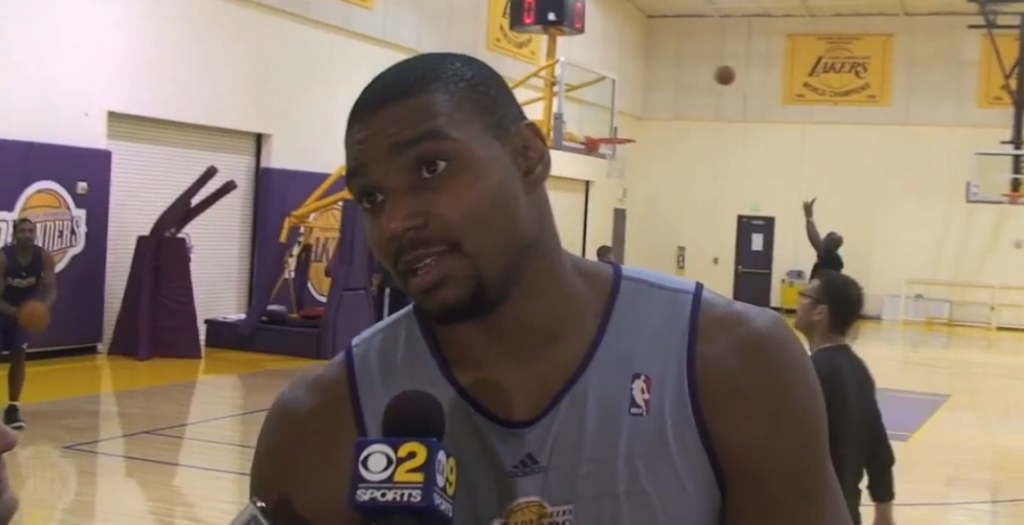
After leaving Philadelphia, he signed with the Cleveland Cavaliers, played for a short time, was traded to the Chicago Bulls, and was then let go. That would be his last job. It was a short one with the Indiana Pacers in 2013–14. For someone who was drafted as the youngest player in NBA history (a record he still holds), the end felt sudden and quiet in a way that bigger careers don’t usually do.
Still, people tend to forget what Bynum did build up during his productive years. It really paid off when the Lakers put money into him and hired Hall of Famer Kareem Abdul-Jabbar to be his personal coach. Before he hurt his knee, his 2008–09 season was truly dominant. He scored 42 points against the Clippers, which was the high point of his career, and he had five straight double-doubles, numbers that put him in the same league as the best players. He got every dollar of his contract.
Andrew Bynum’s net worth of $45 million shows that his career gave as much as it could before the body said otherwise. In the years since he retired, it’s still not clear how he has handled and spent that money. What is clear is that the financial base was strong, based on real production, a real championship history, and contracts that were earned through talent, not just hype.
Fans of the NBA seem to remember Bynum more for what could have been than for what was. But what was—two rings, an All-Star selection, and millions of dollars made before age 30—isn’t nothing. Not even close.
