



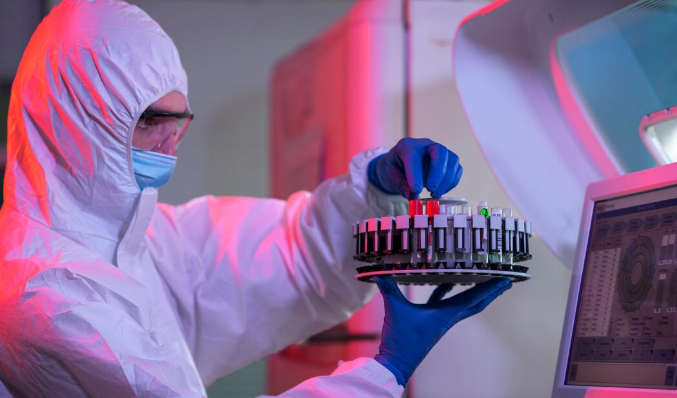
The space where South Korea’s KSTAR reactor is located doesn’t appear to be a star’s birthplace. It’s sterile, quiet, and packed with cables, blinking monitors, and a metal device that resembles a huge steel donut. Diagnostic screens flicker with streams of data as engineers switch between consoles. However, something extraordinary occurred inside that room for a brief but noteworthy period of time. Scientists were able to grasp a tiny replica of the Sun.
The KSTAR reactor maintained an ultra-hot plasma loop at temperatures close to 100 million degrees Celsius for about 100 seconds. That is more than six times hotter than the core of the Sun, a temperature so high that regular matter would just evaporate. At first glance, the researchers’ ability to maintain that plasma’s stability for almost two minutes may seem insignificant. However, those seconds are very important in the field of fusion research.
| Category | Details |
|---|---|
| Reactor Name | KSTAR (Korea Superconducting Tokamak Advanced Research) |
| Location | Daejeon, South Korea |
| Research Organization | Korea Institute of Fusion Energy (KFE) |
| Reactor Type | Superconducting Tokamak |
| Record Achievement | Sustained high-temperature plasma for ~100 seconds |
| Plasma Temperature | Around 100 million °C (over six times hotter than the Sun’s core) |
| Previous Record | About 48 seconds at similar temperatures |
| Goal for Future Experiments | Maintain plasma for 300 seconds by 2026 |
| Energy Principle | Nuclear fusion — fusing hydrogen atoms into helium |
| Reference | https://www.livescience.com |
The simplicity of the idea is almost alluring. Massive amounts of energy are released when light atoms like hydrogen fuse together; this is the same reaction that powers all of the stars in the night sky. Fusion generates almost no carbon emissions and no long-lived radioactive waste, in contrast to conventional nuclear power. The fuel itself is incredibly abundant and is primarily made of hydrogen.
When you take a step back and think about what scientists are trying, it becomes evident why. Without the crushing gravity that stars employ to maintain stable fusion, they are essentially attempting to replicate the conditions found inside a star. That entails heating gas to unthinkable temperatures on Earth and holding it there long enough for atomic nuclei to collide and fuse.
The fourth state of matter, plasma, is created when that gas swirls like a glowing storm of charged particles. The real battle starts with controlling that plasma.
Strong magnetic fields function as imperceptible walls inside a tokamak reactor like KSTAR, keeping the plasma away from the metal surfaces of the reactor. The plasma would instantly collide with the walls in the absence of those magnetic fields, cooling and collapsing before fusion could even start.
Physicists frequently compare the process to trying to contain a lightning bolt inside a bottle when analyzing the data from these experiments.
The KSTAR machine has been getting better at that trick over time. It maintained plasma at 100 million degrees for roughly 30 seconds in 2021. Subsequent tests increased that time to 48 seconds. The reactor has now doubled that endurance, surpassing the 100-second mark.
Here, it’s difficult to ignore the pattern. Every advancement is gradual and almost annoyingly slow. However, this is frequently how challenging technological advancements are.
It must feel a little strange to stand in the control room during these experiments. The building is quiet, cool, and unremarkable outside the reactor chamber. Inside, plasma hotter than the Sun is struggling with magnets stronger than anything found in nature. A few meters of steel divided two worlds.
The KSTAR project is also part of a broader global effort. Fusion labs in China, the US, and Europe are competing to find a solution to the same issue. For instance, the enormous ITER reactor being built in southern France seeks to demonstrate sustained fusion reactions on a never-before-seen scale.
In this way, KSTAR functions in part as a testing ground where researchers hone methods and equipment before implementing them in larger reactors.
Upgrades to a part known as the divertor, which controls the massive heat and exhaust generated by fusion reactions, are one of the reasons the most recent run was successful. Tungsten, a metal that can withstand high temperatures, was used by engineers to replace older carbon components.
Such minor engineering choices seldom make headlines. However, they frequently decide whether plasma collapses or remains stable.
These experiments are also at the center of a larger energy discussion. Fusion is becoming more and more seen by investors and governments as a long-term solution to climate problems. Startups that promise small fusion reactors or novel magnetic confinement systems are receiving billions of dollars. Investors appear to think the technology is finally becoming more feasible.
Physicists are still generally cautious. Prior to encountering new technical obstacles, fusion research has yielded promising breakthroughs. It’s amazing that plasma can last for 100 seconds. However, the real test is still generating net electricity, or more energy out than energy in. And a working reactor has not yet reached that milestone.
Even though the finish line is still far off, there is a subtle sense that humanity is moving closer to something significant as this field develops. Researchers learn something new about magnetic stability, heat transport, and turbulence with every longer plasma pulse. Fire-written lessons.
By 2026, the KSTAR team wants to maintain those scorching temperatures for 300 seconds. If that occurs, steady-state fusion—the point at which plasma can burn continuously as opposed to in short experimental bursts—will have advanced.
It’s still unclear if that future will materialize in ten or fifty years. Fusion is known for always being on the horizon. Occasionally, though, a new experiment brings that corner closer.
Additionally, scientists were able to hold something that remarkably resembles a tiny star for a hundred seconds in a South Korean laboratory.
