



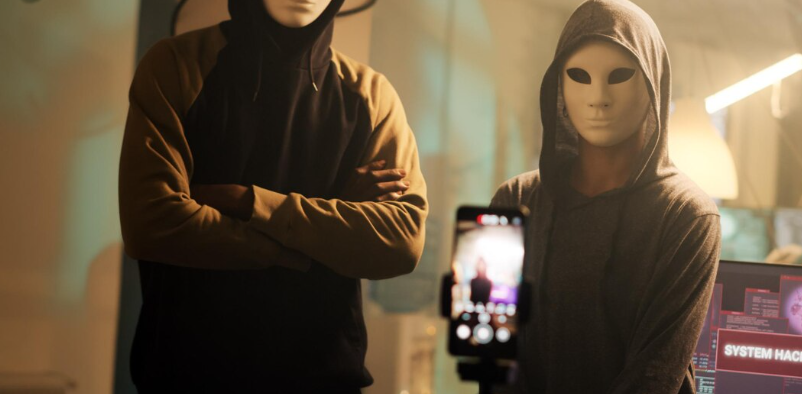
A young journalist is sitting in a tiny Beirut apartment late at night, watching a video on his laptop that seems to show a missile strike close to Tel Aviv. The video, which features flashing explosions, terrified voices, and the far-off glow of fires, quickly goes viral on social media. Thousands of people start sharing it in a matter of minutes.
Then someone observes an oddity. The shadows move strangely. The smoke appears nearly too smooth. There was never an explosion.
| Category | Information |
|---|---|
| Technology | Deepfakes / Synthetic Media |
| Definition | AI-generated or manipulated video, audio, or images designed to appear real |
| Key Technology | Generative Adversarial Networks (GANs) |
| Primary Use in Conflict | Propaganda, misinformation, psychological operations |
| Regions Affected | Middle East, Ukraine, global conflicts |
| Social Platforms | X (formerly Twitter), Telegram, TikTok |
| Key Actors Mentioned in Research | Governments, extremist groups, influence networks |
| Risk | Public confusion, propaganda amplification, erosion of trust |
| Legal Context | Geneva Conventions and international humanitarian law debates |
| Reference | https://www.motherjones.com/ |
Something unsettling about contemporary conflict is captured in that moment when people realize the video might not be authentic. Rumor networks, propaganda broadcasts, and information wars have always shaped the Middle East. However, a new twist has been introduced by artificial intelligence: videos that appear real, spread quickly, and occasionally never existed at all.
This new phenomenon has been dubbed the “deepfake war” by researchers and analysts. Another tool in geopolitical rivalry is synthetic video produced by machine learning systems.
It’s not tanks or missiles. Perception is what it is. AI-generated war videos are now shared alongside actual battlefield footage on social media sites like X (formerly Twitter). Some display fake airstrikes. Others show political figures announcing policies they haven’t really discussed.
It gets harder to distinguish between scenes that were produced by software and those that are real as you watch these clips scroll by on a phone screen.
And the true weapon may be that uncertainty. Misinformation has been a part of warfare for decades. Propaganda has been broadcast by governments. In an effort to boost morale, militants have released staged videos. However, deepfake technology alters the game’s scale.
These days, convincing videos can be produced in a matter of minutes by artificial intelligence systems. A person can create a televised speech or eerily accurately mimic a missile strike using simple software tools. Extremist groups have taken notice.
In the past, organizations like ISIS depended on human editors and propaganda teams. Coordination, editing time, and equipment were needed to produce videos. These days, AI tools speed up and lower the cost of the process.
It is possible to create synthetic news broadcasts overnight. Speeches can be instantly translated into several languages by AI voices. Propaganda that appears more refined is the end result.
This is an odd irony. Media technology that was previously exclusive to governments and television studios is now available to even small militant networks.
There is a huge audience. Over the past ten years, social media usage has increased significantly throughout the Middle East. Breaking news is now delivered to millions of people via phone screens rather than television networks. Deepfakes thrive in that setting.
Civilians may think the fighting is over if they watch a video that says a ceasefire has been declared. A made-up speech from a military leader might imply escalation or surrender. These signals have the potential to spread throughout entire populations in chaotic information environments.
The value of deceit has long been recognized by military strategists. However, deepfake technology challenges that notion. International law finds it difficult to keep up.
The Geneva Conventions and associated treaties were created to control physical behavior on the battlefield, including how soldiers handle prisoners and safeguard civilians. They never imagined that during a conflict, entire populations could be manipulated by fake videos.
The question of whether some deepfake techniques might be against international humanitarian law is currently being debated by legal experts. For example, a fake surrender message might put soldiers and civilians in danger if it causes people to become less vigilant.
However, enforcement is still unclear. In general, technology advances more quickly than the law.
analysts contend that misinformation isn’t the only deeper issue. It’s the breakdown of trust in general. People begin to question everything, including real footage, when fake videos proliferate. One could write off a real bombing as a hoax. A real speech could be called a “deepfake.”
Observing this online, a peculiar psychological change is occurring. Reality starts to seem negotiable. In a recent discussion, AI content expert Jeremy Carrasco succinctly explained the effect: once convincing fake videos proliferate online, people begin to doubt their own eyes.
In areas where political tension is already high, that dynamic may prove destabilizing. Every video clip affects how the world views the Middle East’s conflicts, which frequently take place under close international scrutiny.
Deepfakes add complexity to that image. Viewers may see a burning skyscraper in Dubai at one point. An aircraft carrier was destroyed off the coast of Iran, according to another video. Before anyone confirms them, both videos may spread widely.
And sometimes it’s too late to realize the truth. Governments are beginning to react. These days, fact-checking teams examine war footage frame by frame, looking for hints such as odd lighting, strange motion, or inconsistent physics.
However, content creation is still happening at a faster rate. Every year, artificial intelligence advances. Videos that were once blatantly phony now seem unsettlingly realistic.
As you watch this happen, you get the impression that the battlefield is getting bigger. War is no longer limited to military installations or geographical areas. It is present in news feeds and algorithms, influencing perception instantly.
Perhaps the most unsettling aspect of the deepfake war is that it can destabilize an area without the use of missiles. A compelling video and a few million people who are willing to hit “share” are sometimes all it takes.
