



The fact that Chris Rock, a young man who once worked as a dishwasher at Red Lobster to make ends meet, is now thought to be worth $60 million has an almost poetic quality. He was bused to schools in mostly white neighborhoods while growing up in Bedford-Stuyvesant, Brooklyn, and experienced bullying, which he would later discuss on stage with unsettling clarity. He left high school early. He obtained a GED. He didn’t have a clear advantage. What he possessed was a keen sense of observation and an unwavering dedication to stand-up comedy that ultimately paid off in ways that even he probably didn’t fully anticipate.
Rock’s financial journey is similar to the trajectory of his comedic career in that it starts out slowly before exploding. Survival was the focus of his early years in the late 1980s and early 1990s. Eddie Murphy, who had taken him under his wing, gave him a small part in Beverly Hills Cop II, which opened some doors. Between 1990 and 1993, he gained widespread recognition on Saturday Night Live, but his tenure there was inconsistent, and he was essentially fired. A poorer performer might have been derailed by that. Rather, it forced Rock to return to stand-up, which proved to be his destiny.
Most people cite the 1996 HBO special “Bring the Pain” as the turning point, and for good reason. It brought him two Emmy Awards, widespread praise from critics, and the kind of cultural impact that generates actual revenue. “Bigger & Blacker” and “Never Scared” were later specials, and by the mid-2000s, Rock was regularly among the highest-paid comedians working anywhere. He reportedly made about $60 million between June 2016 and June 2017 alone, which is equivalent to his entire estimated current net worth. This gives some idea of his earning potential at his highest point.
Netflix saw that value early on. For two stand-up specials in 2016, the streaming service paid Rock about $40 million, or $20 million each. It was one of the biggest agreements of its kind at the time, and it was a sign of a larger shift in comedy funding away from traditional television and toward streaming services prepared to pay top dollar for well-known brands. His 2023 special, “Selective Outrage,” which was aired live from Baltimore following the controversial 2022 Oscars incident, attracted a large global audience.
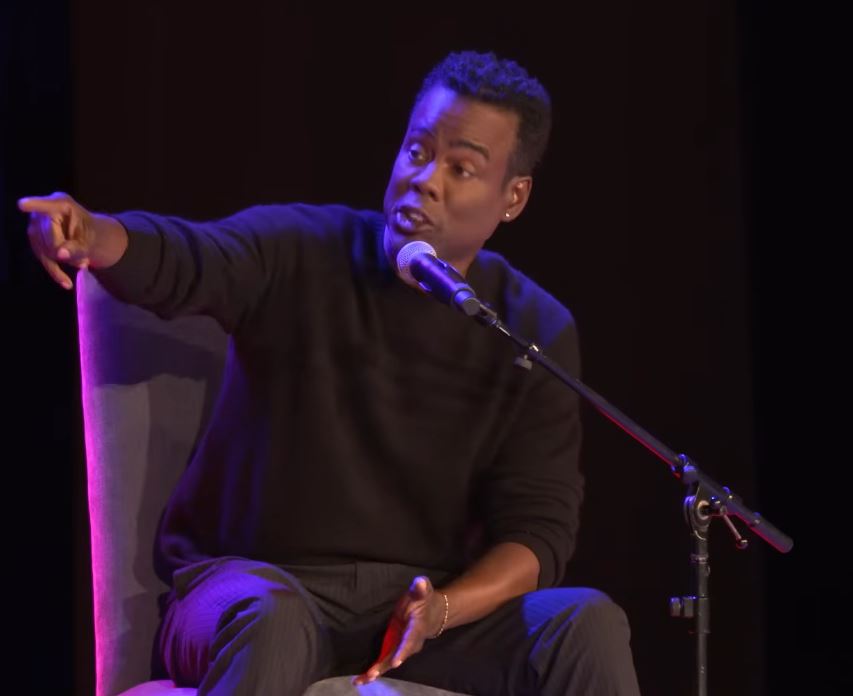
Layers were added by his film career. His voice acting in the Madagascar franchise, which made well over a billion dollars globally, kept his name in the public eye for generations. Lethal Weapon 4, Grown Ups, and smaller dramatic roles completed a varied resume. His credits as a television producer also include the creation and narration of the semi-autobiographical sitcom Everybody Hates Chris, which ran from 2005 to 2009.
However, Chris Rock’s current estimated net worth of $60 million has an asterisk—or perhaps two. After 20 years of marriage, he divorced Malaak Compton in 2016, and the settlement reportedly cost him up to $40 million. It’s the kind of financial setback that might have subtly changed his course. The amount of money he was making is demonstrated by the fact that he is still worth $60 million.
The issue of the role that escaped is another. Rock recently talked candidly about being asked to voice Donkey in the Shrek series at least twice; Eddie Murphy was eventually cast in the role. Murphy reportedly kept talks open until Rock’s deals fell through because he had a recording studio in his house where he could record whenever it was convenient for him. According to reports, Rock said, “I’m out of $30 million just cause Eddie went downstairs,” with the kind of resigned humor that usually lands differently when $30 million is actually on the table.
It’s difficult not to think that story is strangely appropriate. The comedy of loss, being close to greatness, and the unique absurdity of life’s events have been the foundation of Rock’s entire career. It’s almost too ideal to miss out on Shrek because his mentor had a home studio. He probably doesn’t think about it for very long at $60 million. However, it’s the kind of detail that gives his story a genuine human feel rather than a clean climb.
