



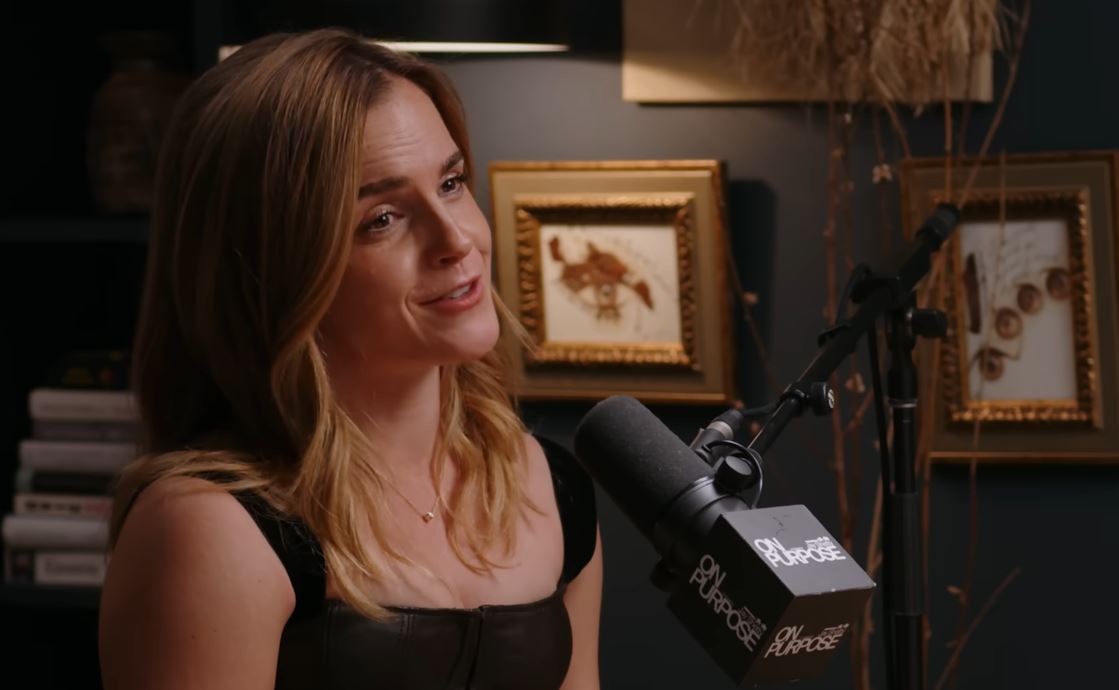
This story has a bad version. Before they even know what a bank account is, child actors make millions of dollars, and by the time they are in their mid-twenties, the majority of it is gone. The entertainment industry would prefer not to acknowledge how frequently this occurs. Emma Watson’s story takes a different turn, and it turns out that the difference stemmed from one awkward conversation and her subsequent actions.
When Watson was chosen to play Hermione Granger in the first Harry Potter movie, she was eleven years old. She wore robes, memorized lines, attended sets all over Britain for the next nine years, and—quite coincidentally—became a millionaire multiple times. The odd thing is that she was unaware of it. The fees were quietly building up in accounts she did not yet have access to, and she was subsisting on a weekly allowance of about fifty pounds.
Her father sat her down and gave her the number when she turned eighteen. Later, Watson spoke candidly about the incident to British Vogue. “I felt sick, very emotional,” she remarked. “It was a real shock.” She had become extremely wealthy from the Harry Potter series by the time of that conversation, but she hadn’t really experienced any of it. The more intriguing part of the story is what she did next, so it’s worth pausing to consider that emotional detachment.
Instead of giving everything to a manager and leaving, Watson signed up for a money management course at Coutts, a private bank that has a track record of catering to wealthy customers. By most standards, it was out of the ordinary for a teenager to do that.
It also proved to be the fundamental choice that influenced everything that came after. There’s a feeling that this was more than just financial education for her; it was a means of taking control of a life that had been largely controlled by others since she was a young child.
The same grounded quality can be seen in her early purchases. a Prius from Toyota. a laptop. a vacation with her father, as he was deserving of one after all his hard work. These are not the spending patterns of a person who has suddenly become enamored with wealth. They point to someone who has considered the true purpose of money. Even at nineteen, the Prius—which her friends reportedly referred to as a brick—tells you something about her priorities.
The portfolio became increasingly complex over time. Watson was placed in one of the most strategically complex areas of international fashion when she joined the board of Kering, the luxury conglomerate that owns Gucci, Saint Laurent, Balenciaga, and Alexander McQueen. The role is not passive. Being a board member at a company like Kering entails discussing issues like long-term capital strategy, supply chain ethics, and brand valuation. It was a significant move away from the realm of celebrity endorsements.
She also shifted her investment focus to sustainable endeavors. One of the first Harry Potter alumni to make a significant transition into angel investing was Watson, who supported a biodegradable plastics company in 2021. It’s unclear if that wager will be profitable because early-stage sustainability investments are extremely risky, but it does reveal her level of conviction. The decision seems in line with her public advocacy, which has consistently prioritized responsibility over appearances.
Watson’s estimated net worth as of 2026 is $85 million. Although the Harry Potter series laid the groundwork, her current situation can be attributed to the discipline surrounding the events that followed. This is not the result of child stardom alone. It produces the other kind most of the time. Watson treated her early wealth as a beginning rather than an end, and she did so almost quietly and without much fanfare. It turns out that this distinction is crucial.
