



Loic Fery’s story has an almost cinematic quality, but he has never shown much interest in sharing it. He worked discreetly in London’s financial sector for the majority of the previous ten years, managing a credit-focused hedge fund and sporadically answering inquiries about a mid-table French football team. When his son advanced to the Wimbledon semifinals, everyone became curious about the man’s identity and how he became wealthy.
Loic Fery’s estimated net worth ranges from €320 million to $400 million, depending on the currency conversion method and the source. He was listed as one of France’s 400 richest people by the French business magazine Challenges, and more recent statistics indicate that ranking is still in effect. After working in the credit markets for about 25 years, first for other people and then primarily for himself, he amassed a sizeable fortune.
Fery was raised in Pont-à-Mousson, a small Lorraine town where both of his parents were teachers, after being born in Nancy in 1974. His mother taught math, while his father taught physical education. It’s possible that his early development was shaped by the combination of rigor in his mind and discipline in his body. After achieving academic success and earning his baccalaureate with honors, he eventually gained admission to HEC Paris, one of the most prestigious business schools in France. He wasn’t wealthy from birth. He was raised in a household where earning money is expected.
In September 1997, just as the Asian financial crisis was tearing through regional markets, he arrived in Hong Kong following HEC. That would be a frightening time to begin for the majority of people. It seems to have been formative for Fery. He learned how money moves under pressure, how institutions absorb shocks, and how the gap between opportunity and panic can sometimes close very quickly while working in the credit markets for Société Générale. He remained in Hong Kong until 2000, tried his hand at an early-stage startup that was intended to assist European businesses in entering Asia, watched as the dot-com bust devastated it, and then left for Europe.
He returned to London, where he established Crédit Agricole’s credit division in the nation’s capital. He was in charge of a group of about 150 employees by 2006. He was allegedly the company’s highest-paid employee by early 2007. Then, on the New York exchange, a trader under his more general supervision lost about €200 million. In September of that year, Fery was let go.
What transpired next reveals something about him. Before the year was out, he started his own company instead of spending months repairing his reputation within another organization. Chenavari Investment Managers was founded in the midst of the subprime crisis and is named after a mountain peak that can be seen from his childhood home in the Ardèche.
The timing seems careless. In actuality, it might have been his career’s most wise strategic choice. Many investors were misinformed, mispriced, and disturbed by the credit markets. Fery was well aware of them. Chenavari eventually managed about $5.8 billion in assets for pension funds, sovereign wealth funds, and institutional clients worldwide after growing gradually and then dramatically.
How much of that was converted into personal wealth over time is still unknown. By 2023, What Challenges’ 2011 estimate of €120 million had increased to €320 million. For a successful fund manager with significant equity in their own company, that trajectory—more than doubling in ten years—is not out of the ordinary, but it is still an impressive trajectory.
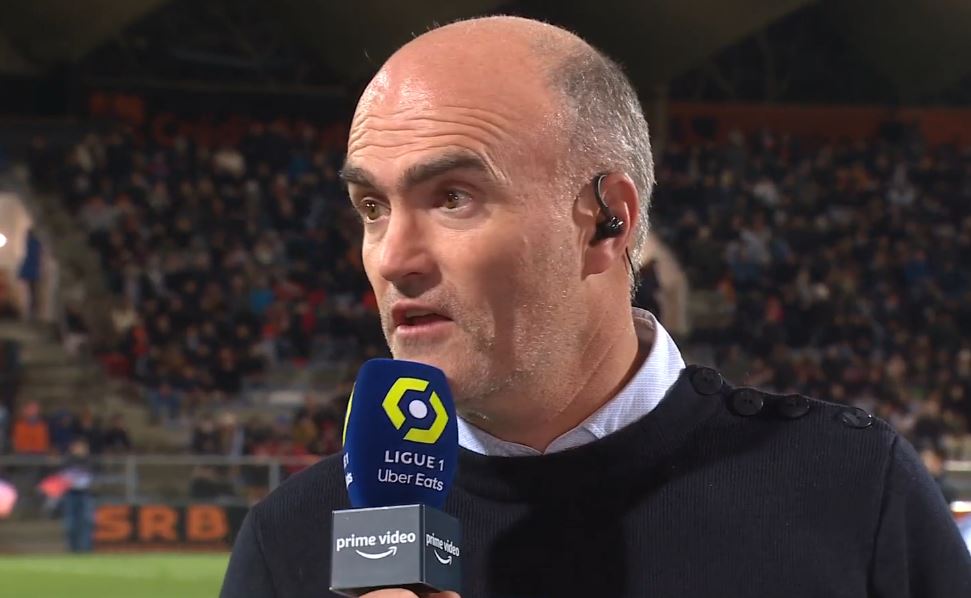
He also acquired the Brittany football team FC Lorient in 2009, making him the youngest Ligue 1 president at the age of 35. His life has been more uneven when it comes to football. Lorient experienced periods of cautious financial management, promotions, and relegations before faltering in recent years. Later, Fery acknowledged in public that it had been a mistake to eliminate the sporting director position. That level of accountability from an owner is refreshing. Most would rather remain silent or assign blame. He continued to serve as president even after selling his ownership stake to Bill Foley’s Black Knight Football Club group in early 2026.
Now, however, the story of Loic Fery is more about the moment at Wimbledon—sitting in the players’ box and watching his son Arthur advance to the semifinals as a wild card ranked 114th in the world—than it is about the hedge fund or the football team. In 1991, Olivia, Arthur’s mother, participated in the French Open as a professional tennis player. In 2022, the couple got divorced. Their son, who seemed to have been influenced by both of them in different ways, went out and accomplished something amazing on Southwest London’s grass courts.
At this level, wealth seldom moves smoothly. However, the way this specific fortune was amassed—through markets, through setbacks, and through a hedge fund named after a mountain he could see from his family home as a boy—feels authentic. It was not inherited by Loic Fery. He constructed it, was fired once during the process, and then rebuilt it, making it bigger.
