



Jim Parsons has a subtle quality that makes him remarkable. The loudest celebrity in the room isn’t him. He doesn’t post cryptic Instagram tirades or chase tabloid covers. Nevertheless, it’s difficult to ignore the fact that this specific Houston, Texas actor may have been more adept at the long game than nearly everyone else in the television business when you consider the numbers—the accolades, the contracts, and the $160 million in net worth.
Like many of these tales, it began with failure rather than success. Before landing a show that aired, Parsons tried out for between fifteen and thirty different television pilots. The number of rejection rooms is astounding. The majority would have changed their minds. He didn’t.
Parsons took on the role of Sheldon Cooper, a physicist with exceptional intelligence and nearly disastrous social awareness, when The Big Bang Theory debuted in 2007. It would have been easy for the character to become a one-note joke. Critics compared Parsons’ use of him to Buster Keaton and the silent film era because of how he held his body, cocked his head, and moved through a room, all of which were more akin to physical poetry. The show’s creator, Chuck Lorre, allegedly referred to Parsons’ instincts as unteachable. That seems correct.
As is sometimes the case, the money followed the talent. By 2013, Parsons was making $325,000 per episode, along with co-stars Johnny Galecki and Kaley Cuoco. After new contracts secured them through the tenth season of the show, that amount had increased to $1 million per episode by 2014. From 2015 to 2018, Forbes named Parsons the highest-paid television actor in the world; at one point, he earned $29 million in a single year. Film stars used to be the only ones with those kinds of numbers.
Then came the decision that continues to be discussed. Parsons declined a $50 million contract in August 2018 that would have guaranteed two more seasons of The Big Bang Theory. The program came to an end. According to reports, his co-stars were taken aback and initially incensed. Reading between the lines gives the impression that Parsons’s relationship with the other members of the cast was put to the test in ways that were never made public.
However, Parsons had already taken a cautious stance. He had been executive producing and narrating Young Sheldon, a seven-season prequel series that went on to become syndicated, since 2017. This revenue stream kept his name and his investment in Sheldon Cooper alive without requiring him to make weekly appearances on set. That choice may have appeared rash at the time. Now, it doesn’t appear careless.
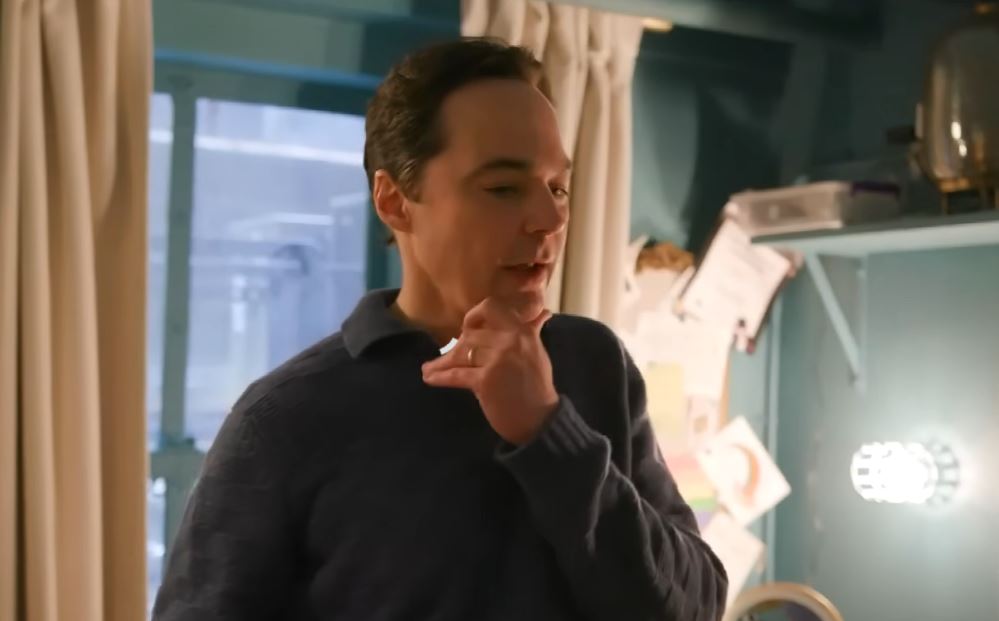
His production company, That’s Wonderful Productions, which he co-founded with his husband Todd Spiewak, has supported smaller, frequently LGBTQ-focused projects like Special, Call Me Kat, and Equal, which represent a different set of priorities than purely commercial calculation. This seems deliberate in some way. Parsons has never shown a strong desire to become a franchise. Harvey, An Act of God, The Boys in the Band, and most recently Our Town and Mother Play, which earned him a Tony nomination in 2024, were among the many Broadway productions he returned to.
The majority of sources estimate his net worth at $160 million, which is the result of multiple fortunate roles. With a BA from the University of Houston, an MFA from the Old Globe Theatre, and an MFA from the University of San Diego, it represents an actor who took his training seriously and developed a career with a remarkable range for someone the public will always associate with one character. Spoiler Alert, Hollywood on Netflix, and Hidden Figures all displayed a distinct register and a readiness to be complicated or disliked on screen.
It was no coincidence that Jim Parsons became the wealthiest cast member of The Big Bang Theory. He was aware of what he and Sheldon Cooper had created. Maybe more than anyone else, he knew when it was time to stop. Then he managed to continue making money from it. The $160 million is likely better explained by that combination of instinct and discipline than by any one paycheck.
