



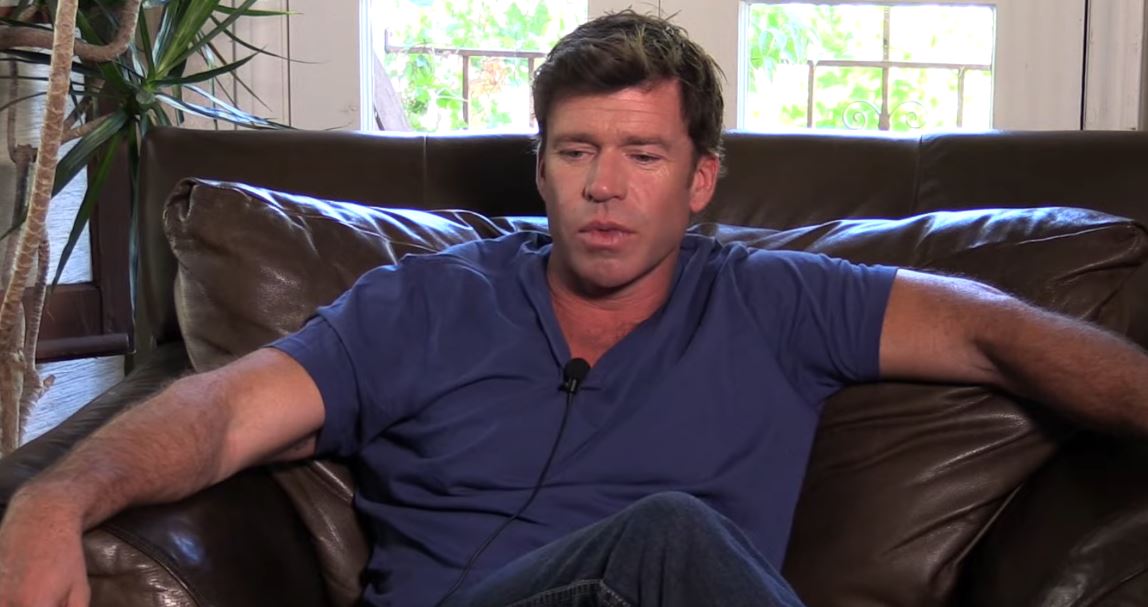
In a scene from Yellowstone, Taylor Sheridan plays his own recurring character, Travis Wheatley, a horse trader with an easy drawl and no regrets. The 6,666-acre Four Sixes Ranch in Texas is shown as the cameras pan wide. That ranch belongs to Sheridan. Before purchasing it, he wrote it into the show. Additionally, he received $50,000 per week for filming there from Paramount, the network that aired the show, in addition to $25 per head for renting his own cattle. It’s more than just excellent TV. That’s a model for a business.
The son of a cardiologist with a sharp sense of humor and a talent for storytelling, Sheridan spent his childhood weekends on a family ranch outside of Waco. After leaving Texas State, he worked as a lawn mower in Austin until a talent scout at a mall noticed him. Before being pushed toward a typewriter by a business affairs executive’s refusal to give him a proper raise, he worked for years in small TV roles, such as Veronica Mars and Sons of Anarchy. Perhaps that rejection was the best thing that had ever happened to him.
What came next was a run that is uncommon in Hollywood. Hell or High Water, Sicario. Then came Yellowstone, which debuted on the Paramount Network in 2018 and attracted viewers that cable television had mostly given up on. For its most recent season premiere, the show attracted over 16 million viewers, numbers that are comparable to major network broadcasts.
Not only did it save the Paramount Network, though. With the prequel 1883 launching the platform with real momentum, it became the financial case for Paramount+ as a streaming service. According to people familiar with the situation, Sheridan delivered that series at “high cost and blinding speed,” and it fulfilled all of his promises.
Sheridan had created something more akin to a content factory than a writers’ room by the time the franchise grew to include 1923, Tulsa King, Special Ops: Lioness, Mayor of Kingstown, and Landman. For a large portion of it, he has been credited as writer, director, and creator. This is a workload that would be questionable in any typical production setting, but he has maintained it with amazing consistency. Twelve programs were produced. Twelve hits. When he talks about his worth, he cites that record, and the math is convincing.
It is worthwhile to look closely at the underlying economics. Sheridan ultimately received close to $200 million from Paramount as part of a ViacomCBS agreement to produce several series. He effectively charges the network to access the 6666 Ranch, which he bought for more than $320 million. His production company, named after the Texas county of Bosque, is at the heart of a network that encompasses entertainment properties, ranching operations, and beef brands. Sheridan seems to have realized early on what most creators discover too late: that having ownership of the physical world your story takes place in gives you leverage that no contract clause can match.
Naturally, it ended the way these things usually do. Sheridan reportedly noticed a change under the new management at Paramount Skydance. Scripts returned with notes he hadn’t requested. Unbeknownst to him, a deal was struck with Nicole Kidman. The Correspondent, his war correspondent series, was discreetly taken off the schedule. That kind of friction builds up quickly for a creator who is best described as someone who needs to be left alone to work, even by those who admire him.
Donna Langley, chair of NBCUniversal, took a plane to his ranches. sat down with him. had lengthy discussions about the potential nature of a future collaboration. Additionally, Sheridan had already made up his mind when Paramount sent a dozen people to a final meeting. The new agreement, which starts in 2029 and is based on 20 shows for NBC and Peacock, is expected to be worth $1 billion if Sheridan succeeds. Netflix, Warner Bros., and Amazon were all involved. He was captured by Langley.
The Madison, a new Paramount+ series starring Michelle Pfeiffer and Kurt Russell, recently broke Sheridan’s own record with 8 million global views in its first ten days. This is more than any launch in his career, including the Yellowstone universe. No ranch wars or gunfights. A family drama, nothing more. Before the majority of viewers had finished the first season, the show was renewed.
There is more to Yellowstone’s franchise economics than just one show. It’s about what happens when a writer realizes that content is just one aspect of the equation and that the land, the deal structure, and the willingness to walk away are the real leverage. Sheridan left Paramount because he didn’t need to stay, not because he was in a desperate situation. That type of power is entirely different.
