



Unexpected, whimsical, and incredibly successful, Google’s entry into playful digital creativity with its Google Art Game collection is akin to discovering a secret garden hidden behind an old library. Google has carefully turned art into a living, breathing experience that anyone with curiosity and a smartphone can interact with, learn from, and imagine rather than viewing it as a relic to be passively appreciated. Users take part in a grand dialogue between creativity and technology through interactive challenges such as Don’t Touch the Art, Blob Beats, and The Forever Labyrinth.
The platform’s growth in recent months has greatly increased its relevance, particularly as gaming and education become more and more integrated. Google has significantly increased public access to the arts and culture by collaborating with more than 2,000 reputable cultural organizations. Google Art Game lets users virtually explore rich artistic landscapes, from the imposing halls of the National Gallery to the limitless imagination of the Guggenheim Bilbao. Google cleverly used AI to create games like Quick, Draw! that transform simple doodles into engaging machine learning conversations, making the experience of AI both entertaining and extremely instructive.
| Project Information | Details |
|---|---|
| Project Name | Google Arts & Culture: Play (Google Art Game) |
| Launch Expansion | 2016 onwards |
| Key Features | AI-based creative games, AR art exploration, educational puzzles, musical canvases |
| Platform Access | Google Arts & Culture – Play |
| Popular Games | Don’t Touch the Art, Blob Beats, Puzzle Party, The Forever Labyrinth |
| Technologies Used | Machine Learning, Augmented Reality, AI-based Animation |
| Cultural Partnerships | Over 2,000 institutions including NASA, National Gallery, Guggenheim Bilbao |
| Primary Purpose | Democratizing access to global art and culture through playful interaction |
Google has created a digital playground where great works of art from history can be viewed in a way that is surprisingly contemporary by working with gifted engineers, curators, and artists. AI-powered experiences like Learning Light, where players experiment with lighting techniques using user-friendly tools, have been seamlessly integrated through strategic partnerships. Innovative projects that combine fine art and animated storytelling, like Dreaming with Flamingos by Yinka Ilori, allow users to immerse themselves in a vibrant musical playground.
In the midst of the pandemic, when museums were closed, Google’s shift to digital interaction was especially helpful. For families, students, and educators looking for inspiration outside of static Zoom calls, Google’s Puzzle Party collections and Daily Gallery projects offered an engaging outlet where traditional platforms failed. These games’ use of cutting-edge AI ensured that inclusivity was more than just a catchphrase by remaining incredibly effective even with weak internet connections.
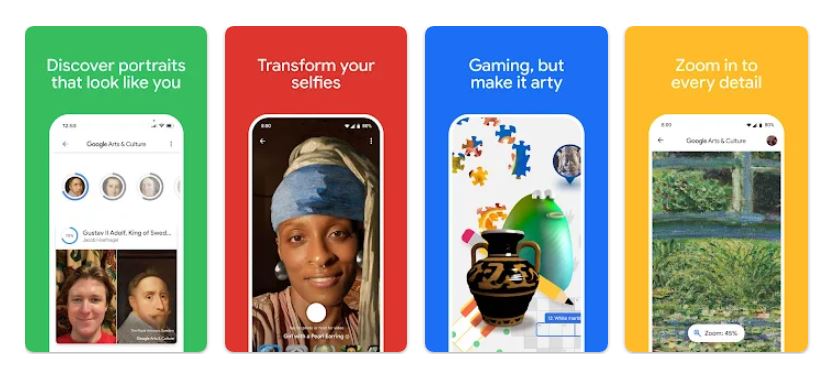
Due to advances in technology and a better understanding of cognitive engagement, the gamification of learning has exploded in the last ten years. Google Art Game is notable not only for its entertainment value but also for the way it uses playful structures to teach difficult concepts, such as art history, spatial awareness, or cross-cultural appreciation. The psychological barrier that frequently surrounds high culture was greatly diminished by games like Geo Artwork, in which players must guess the origin of artifacts.
Google’s initiative has significantly enhanced traditional teaching methods in the context of digital education by combining kinesthetic, auditory, and visual learning styles into a highly adaptable package. Games like What Came First? and Say What You See, which make strategic use of AI, promote visual literacy and critical thinking—two abilities that are becoming more and more important in the fast-paced information environment of today.
Google has made it surprisingly inexpensive for anyone to view masterpieces at life-size scale by incorporating augmented reality technologies. While Pocket Galleries provide exquisitely rendered virtual exhibitions that rival in-person museum visits, tools such as Art Projector enable users to “hang” Van Gogh’s Sunflowers on the walls of their living rooms. For educators, artists, and enthusiasts who might not otherwise have the opportunity to visit these esteemed collections, these experiences feel especially fulfilling.
Remote access to cultural experiences became not only helpful but also necessary during the pandemic. In response, Google simplified user interfaces by combining navigation into “Inspire,” “Play,” and “Explore,” making the transition between education, entertainment, and in-depth exploration incredibly obvious and simple.
The platform’s reach has been further expanded in recent days by the adoption of educators, influencers, and celebrities. Art Selfie, which pairs your face with historical portraits, and Art Transfer, which turns photos into masterpieces, have generated a lot of social media buzz. This has effectively increased engagement and made artistic exploration a shared, viral experience.
By working with organizations such as the Victoria & Albert Museum, NASA, and the Cleveland Museum of Art, Google makes sure that the experience is richly real and not just a gamified trick. One example of how art can motivate action is Passage of Water, which was developed in partnership with NASA and artist Yiyun Kang. It combines immersive storytelling with environmental awareness.
Google Art Game turns passive observation into dynamic creation through meticulous curation and AI-powered design. Users become co-creators in the artistic process, gaining a deep sense of ownership over their learning journeys, whether they are using 3D Pottery to sculpt a historical pot or Blob Opera to create operatic melodies.
It is anticipated that AI and AR integrations will become more profound in the upcoming years, providing even more layered and customized experiences. Initiatives like Rewild The World and Food Mood, which combine culinary artistry and ecological consciousness, respectively, suggest a more complex future in which educational gaming does more than simply amuse; it changes how society views the world.
Since its growth, Google Art Game has encouraged a new generation to view culture as an integral part of daily life rather than as something aloof or scholarly. Google’s approach to making art approachable, captivating, and profoundly human combines the comforting rhythms of mobile gaming with the wonder of finding a Rembrandt or a Kandinsky.

1 Comment
I don’t think the title of your article matches the content lol. Just kidding, mainly because I had some doubts after reading the article.