



Something almost understated about Alan Greenspan‘s life story with money. It is thought that this man, who used to run the biggest economy in the world, is worth about $20 million. He has sat in rooms with four different presidents and could move bond markets with a single carefully chosen word. Not a very rich person. Not flashy. Just quietly and steadily rich, like a lot of serious economists. It kind of fits him.
The first time Greenspan became chairman of the Federal Reserve Board of Governors was in August 1987. He stepped down in January 2006 after 19 years in the role. That’s almost 20 years of handling crises, including the stock market crash of October 1987, the Asian financial crisis of 1997, the 9/11 attacks, and two U.S. recessions. At that level, public service doesn’t make you rich. Afterward, what it does to you is very valuable.
Greenspan didn’t slow down after he left the Fed. He started Greenspan Associates, LLC, a consulting firm in Washington, D.C., where his decades of institutional knowledge could be bought and sold. In the world of economics, that kind of trustworthiness pays off big time. Foreign governments, corporate boards, and investment banks all want to talk to the person who used to whisper and make markets listen. More than anything else, his consulting business is probably what makes him rich now.
He wrote too. When his autobiography, The Age of Turbulence, came out in 2007, it sold very well. It came out at a time when the subprime mortgage crisis was already starting to break apart the financial world, and some economists say Greenspan helped make that crisis happen. I’m not sure if the readers got that irony or not. It’s possible that it made the book more interesting.
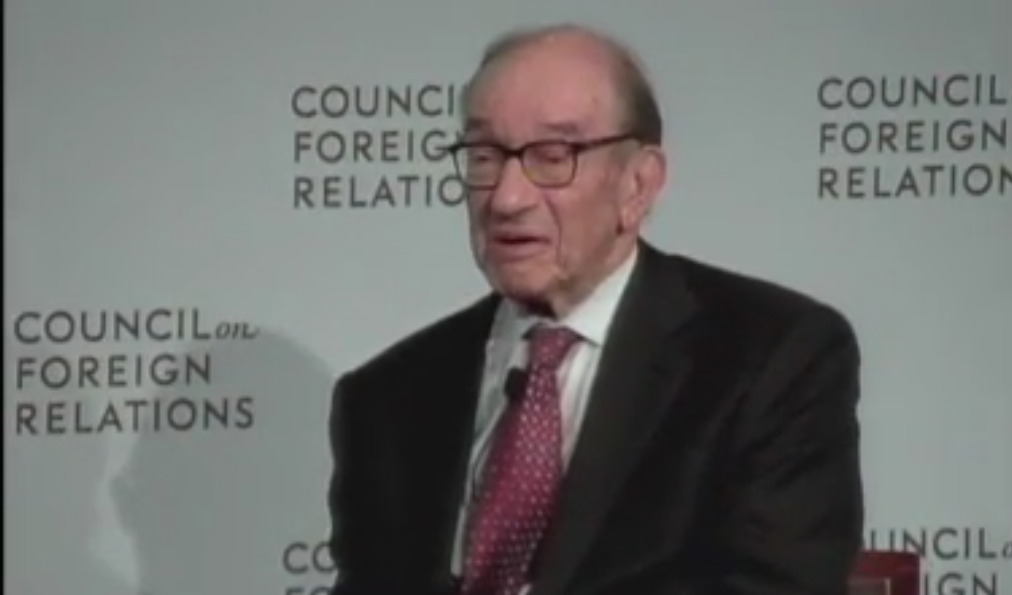
Take some time to think about the subprime story. After the September 11 attacks shook an economy that was already weak, Greenspan lowered interest rates very quickly. More people bought homes. It almost became cool to have an adjustable-rate mortgage. Then, when he raised rates again in 2004, a lot of those borrowers—people who probably shouldn’t have had mortgages in the first place—couldn’t keep up. The defaults spread out. Then came the recession of 2007. Greenspan has admitted that he may have been wrong to believe that markets would fix themselves. Washington doesn’t have many people who are that honest.
In the decades before he joined the Fed, Greenspan worked hard to build his reputation. He was born in New York City on March 6, 1926, and got his bachelor’s, master’s, and doctorate from New York University. For his undergraduate work, he got a perfect score. Arthur Burns taught him at Columbia. This is the same Arthur Burns who would later become head of the Federal Reserve. It’s almost poetic how that family tree looks. He was the head of the economic consulting firm Townsend-Greenspan & Co. from 1954 to 1974 and again from 1977 to 1987. He had been running a business for a long time before he was given control of the money supply.
Over the years, his roles on the boards of Alcoa, J.P. Morgan, Mobil, and Capital Cities/ABC, among others, have also helped his finances in ways that are rarely talked about. There is pay, stock, and networks that come with those seats that grow quietly over time.
At 95 years old, Greenspan has been retired for a long time. But $20 million isn’t just a number; it’s the accumulation of a lifetime spent watching the American economic machine work, breaking it now and then, but always finding a way to stay relevant.
