



It’s almost too honest for comfort when the mayor of New York City jokes at a press conference that people should stream his music to help him make money. “A lot of people say they’re listening,” Zohran Mamdani told reporters not long ago. “They’re not listening.” He was right. Tax records show that Mamdani only made $1,643 in music royalties last year, which is only a small increase from the $1,267 he made the year before. A small number that says a lot.
Mamdani made music his whole life, even when he was in his twenties. He rapped under the names Young Cardamom and Mr. Cardamom. His songs were about a lot of different things, from Indian flatbread to colonialism. This alone shows that he has always been on his own path. He once called himself a “C-list rapper” and said that the indie band Das Racist shaped him. Politicians rarely have that self-awareness and aren’t afraid to own up to an awkward part of their past instead of hiding it.
Mamdani made most of his money in 2025 from his $131,296 salary as a member of the New York State Assembly. His wife worked as a graphic designer and brought in an extra $10,010, bringing their total reported joint income to about $145,000. Living there is nice, but not extravagant. Especially compared to New York City, where $145,000 a year for a family can feel like a lot of money. As mayor, his salary goes up to $258,750 a year. There’s been a big jump, the kind that most people would gladly accept.
Mamdani was uncertain. The mayor’s salary went up from $258,750 to $305,800 on July 16 by a vote of the New York City Council. This is an increase of just over $47,000. Mamdani turned it down in public and with little fuss. When asked why, he gave a routinely bland answer: he hadn’t gone to a single home in New York where people said the mayor was making too little money. “That’s also not my business,” he said. Of course, the line could have been practiced. He might have just meant it, too.
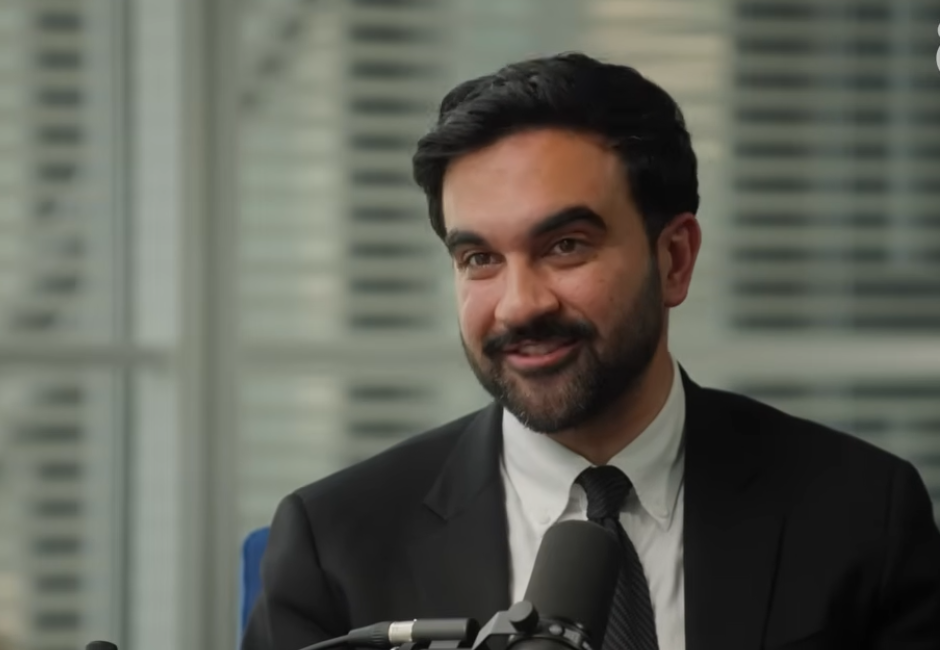
People who follow politics think that this kind of action has more of an impact when the economy is bad. The housing market in New York is terrible right now, and the cost of living is still making it hard for working families in all five boroughs. In that situation, a mayor turning down a $47,000 raise in public isn’t just a story; it hits home in a different way. A behavioral scientist named Dr. Gleb Tsipursky studies leadership and how people interact in the workplace. He said that turning down a raise can help build trust, but only if it’s part of a larger, consistent pattern of behavior. “The dollar amount matters less than whether the action fits a consistent pattern of behavior and policy,” he said. When symbols are by themselves, they fade quickly.
For what it’s worth, Mamdani isn’t the first mayor of New York to have a side business that brings in money from shows. The 2012 tax return for Michael Bloomberg shows that he made between $2,000 and $10,000 from TV appearances, such as in a Matt Damon movie and a Muppets Christmas special. In this city, politicians getting extra money from odd jobs seems to be more of a norm than an exception.
It’s not the numbers that make the Mamdani salary story interesting. It’s how they stand behind them. It’s simple theater to say no to a raise. It gets harder to fake over time if you do it in a way that seems real, based on a real philosophy instead of a PR calculation. For now, it’s still unclear whether Mamdani can keep up his credibility while running a city as complicated and expensive as New York. If things go wrong, the royalties from Spotify won’t even come close to covering the costs.
