



Something seems a little strange when you stroll through Melbourne’s central business district on a Tuesday afternoon. Some towers have quieter lobbies than they ought to. Small clusters are now carried by lifts that used to move large crowds. Entire floors, decked out in new carpet and paint, are vacant above the city’s well-known Paris end of Collins Street, waiting to be occupied.
This is the appearance of a market that is in correction. It was a gradual, uncomfortable reckoning with years of overvaluation, pandemic disruption, and a work-from-home shift that never quite reversed. It was neither dramatic nor loud.
In just six months, office property values in Australia have decreased by more than 10%. The numbers are particularly difficult to look at in Melbourne. Nearly $2 billion in office transactions have recently been completed by major landlords like Dexus and Mirvac, but many of those deals were made at discounts that were nearly double digits off book value. Five Martin Place, a property in Sydney, was sold for twenty-four percent less. A tower in North Sydney sold for almost 14% less than its listed price. These aren’t exactly fire sales in the conventional sense, but they’re close.
According to Morningstar analyst Adrian Atkins, values may eventually drop by 20% from their December 2023 levels. That is a noteworthy figure. Institutional investors, especially those who purchased assets at peak prices in anticipation of consistent long-term returns, find this type of figure unsettling. It’s really hard to tell if the bottom has reached or is still on the horizon.
In some respects, the situation on the leasing side is more bizarre. Knight Frank’s most recent data shows that office incentives in Melbourne’s central business district have reached 48.1 percent, the highest level ever. A moment should be given to that figure. By combining rent-free periods, tenant-funded fitouts, and reduced lease flexibility, landlords are essentially giving tenants back almost half of their headline rent. These incentives rise above 53 percent in some areas of Flagstaff and Docklands. Landlords are lowering the face rent by nearly 40% even in the more exclusive Eastern Core, which is home to Melbourne’s upscale buildings and the city’s traditional financial district.
The market’s worst-kept secret is the difference between rent that is advertised and what tenants actually pay. Technically speaking, prime face rents have risen by 5.2% in the last year to an average of $773 per square meter. However, for a tenant conducting due diligence, that figure means very little when incentives are removed. Once a landlord sweetens the deal to get the space occupied, the effective rent, or what tenants actually pay, can look very different.
Even though the landlord’s position seems painful on paper, it makes sense. An abandoned tower depletes the building’s ecosystem in addition to being a financial burden on the asset itself. Retail on the ground floor suffers. There is no longer the sense of activity that draws in other tenants. In the words of Dr. Tony McGough of Knight Frank, you don’t want an empty tower. Both literally and figuratively, getting someone in, even at a discount, keeps the lights on.
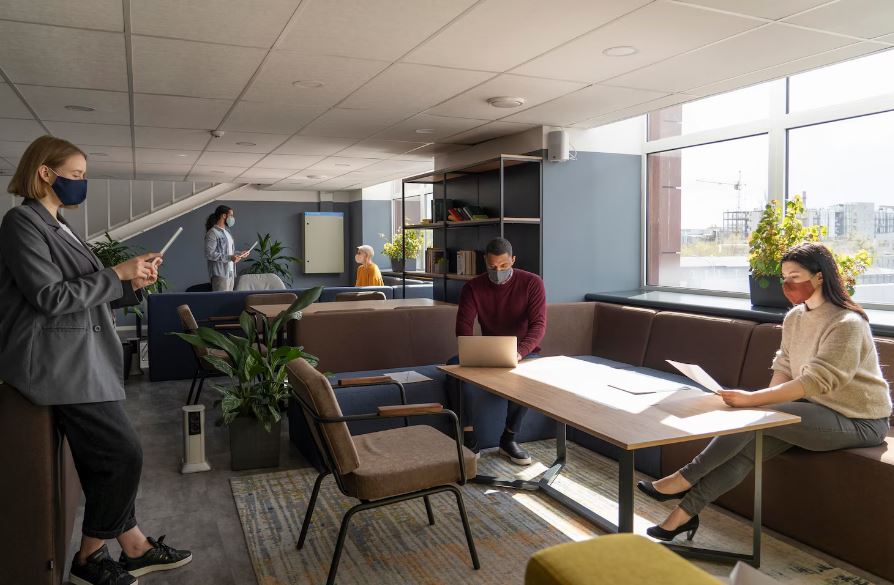
However, there are early indications that tenants’ window of opportunity may be closing. The June 2026 quarter saw the highest number of tenant inquiry briefs since 2022. In the CBD, major corporations like MasterCard, Insignia Financial, and Hostplus have signed new multi-year leases. With 62% of occupiers choosing to maintain or increase their footprint rather than retreat, the post-pandemic downsizing wave seems to be slowing.
The supply picture is also important. After 2026, Melbourne’s development pipeline starts to thin considerably, with very little new stock expected to arrive until at least 2027. That alters the situation for tenants. When competition for high-quality space becomes more intense, their current leverage—the capacity to demand fitout contributions, rent-free periods, and shorter terms—will probably diminish. This may be the final opportunity for real bargaining power for a number of years.
Observing all of this from the street level gives the impression that Melbourne’s office market is somewhere in the middle of a protracted correction, not quite over, but past the worst of the shock. There are still the towers. Tenants are gradually coming back. Now, the question is whether landlords will be able to hold on long enough to witness the anticipated recovery.
