



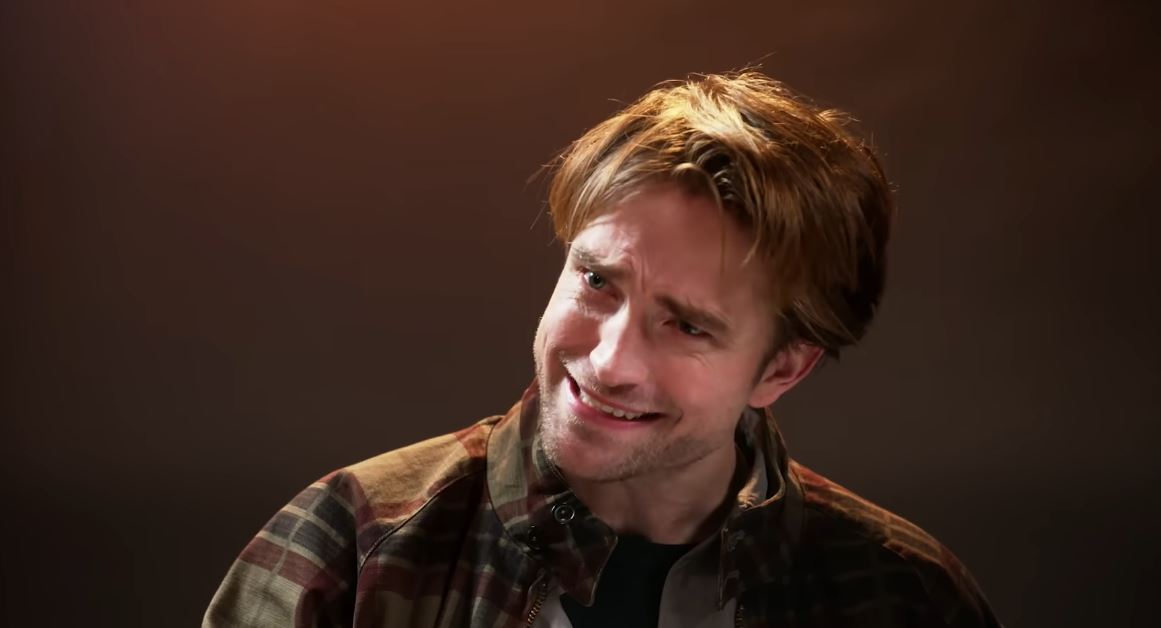
In all the fan coverage and franchise retrospectives, there is a part of the Twilight story that is neglected. Robert Pattinson, who is still largely unknown aside from a brief role in Harry Potter, reportedly made $2 million when he entered the set of a mid-budget vampire romance in 2008. He left the same franchise four years later with an estimated net worth of $70 million. That is not fortuitous. As the franchise’s commercial value became indisputable, negotiating leverage was developed scene by scene and movie by movie.
According to Celebrity Net Worth, Robert Pattinson’s estimated net worth as of 2026 is $80 million, though some sources have put it closer to $100 million. Pattinson has never been the type of actor who releases a neat financial statement, so the discrepancy between those figures is telling. Like his career, his finances require some deciphering.
The majority of it is found in the Twilight numbers. For the first movie, he and Kristen Stewart both made $2 million, which may not seem like much, but keep in mind that neither of them was a box office success at the time. That amount increased to $12 million with bonuses by the second installment.
That was matched by Eclipse. In addition to a negotiated 7.5 percent cut of the theatrical gross, each of the final two Breaking Dawn films received a base salary of $12.5 million. As a result, their combined payout for those two films alone was approximately $40 million. Roughly $70 million was spent on all five movies. It paid remarkably well for a franchise that he later admitted was difficult to manage personally.
Even though the financial benefits were less obvious, what transpired after Twilight is the more fascinating portion of the narrative. For the better part of ten years, Pattinson collaborated with filmmakers such as David Cronenberg, the Safdie brothers, and Robert Eggers on projects that were made at a fraction of the cost of a studio blockbuster and paid their leads appropriately.
None of these films, including Good Time, The Lighthouse, and High Life, brought in $70 million. However, they restored credibility—something that money cannot truly purchase. Pattinson seems to have realized what typecast actors seldom do: the window of opportunity to break free from a franchise image is narrow and rapidly closing.
That credibility paid off in a tangible way by 2022. He received a reported $3 million for his role as Bruce Wayne in The Batman, which was significantly less than his Twilight peak. However, he was part of a movie that made hundreds of millions of dollars worldwide and established him as the face of a possible new franchise. The Batman provided a second chapter on his terms while maintaining his artistic identity, something the Twilight money never quite managed to do.
Beyond movies, Pattinson has developed a long-standing partnership with Dior as a global brand ambassador, which boosts his income without requiring him to make an appearance on a set. He has also continued to show a sincere interest in music, as evidenced by the songs he contributed to the Twilight soundtracks years before such crossovers became commonplace for famous people.
The precise location of his earnings throughout all of this is still unknown. The $80 to $100 million range illustrates the actual ambiguity in the calculation of entertainment wealth; long-term royalties, endorsement agreements, and backend deals aren’t always included in public reporting. It’s evident that Pattinson turned one incredibly successful franchise into enough money to spend ten years making movies that hardly anyone saw in theaters. He then went back to a significant studio role without appearing to need it. That is arguably the most valuable item the Twilight money bought him.
