



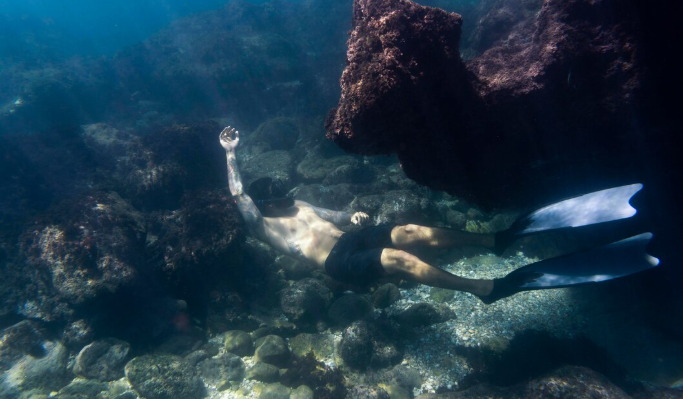
Imagine a snorkeler, face down in warm blue water, being towed slowly behind a research vessel off the coast of Queensland while it counts coral. The scientist is mentally cataloguing decades of damage, calculating bleaching percentages, and recording the presence or absence of things that shouldn’t be missing. It sounds almost meditative. This is how the Australian Institute of Marine Science maintains its long-term surveillance of the Great Barrier Reef. In 2022, this surveillance yielded something truly unexpected: the highest coral cover across two-thirds of the reef in more than 36 years. Following the heatwaves, bleaching, and starfish outbreaks, the statistics showed an increase. Contrary to expectations, the reef had grown back.
That news left everyone unsure of what to do. There was cautious recognition, but no joy. The reef’s recent past had taught scientists not to believe positive headlines, and they are naturally cautious of successes that emerge in ecosystems as complex as this one.
The Great Barrier Reef — Status, Science & Recovery
| Location | Coral Sea, off the coast of Queensland, northeastern Australia — stretching from Cape York to Gladstone, over 2,300 km |
| Size | Over 134,000 square miles — larger than the UK, Switzerland, and Holland combined; world’s largest coral reef system |
| Primary monitoring body | Australian Institute of Marine Science (AIMS) — conducts annual in-water surveys of 100+ individual reefs via Long Term Monitoring Program |
| 2022 coral cover milestone | Highest recorded coral cover across two-thirds of the reef in over 36 years — followed by a pause in recovery by 2023 |
| Mass bleaching events (recent) | Four mass bleaching events in seven years (2016–2022), affecting nearly 90% of Australia’s corals at peak severity |
| 2023 coral cover readings | North: 35.7% (down from 36.5%); Central: 30.8% (down from 32.6%); South: 33.8% (stable) — decline caused by bleaching, disease, crown-of-thorns starfish |
| Dominant recovering species | Acropora genus (staghorn, elkhorn, tabletop corals) — fast-growing but highly vulnerable to bleaching, cyclones, and crown-of-thorns predation |
| Latest restoration effort | AIMS partnering with SECORE International (March 2026) on a 3-year Global Tech Transfer Project — coral seeding technology being deployed across Caribbean and GBR |
| Reference / tracking body | Australian Institute of Marine Science (AIMS) |
Two decades ago, reef ecologists would have thought it nearly impossible that the Great Barrier Reef would experience four mass bleaching events in seven years since 2016. During that period, bleaching damage was present in nearly 90% of Australia’s corals. According to a 2020 study, about half of the reef’s corals have vanished in recent decades, and if ocean temperatures continue to rise, the remaining corals are expected to disappear within a century. In that situation, recovery seemed like borrowed time.
Staghorn, elkhorn, tabletop corals, and other fast-growing species that swiftly spread into disturbed areas make up the genus Acropora, which is responsible for the majority of the recovery. In terms of reefs, they are opportunists. abundant, striking in terms of architecture, and extremely vulnerable.
When describing the situation, Konrad Hughen, a principal investigator at the Woods Hole Oceanographic Institution’s Reef Solutions Initiative, used an analogy that stuck with listeners: what might be returning is more akin to a monoculture of planted pulp trees than an old-growth forest. The underlying resilience that a diverse, ancient reef system carries may still be lost or diminished in ways that the annual surveys don’t fully capture, even though the structure is there and the numbers appear promising.
What many scientists believed would eventually occur was confirmed by the AIMS update from 2023. The healing stopped. The hard coral cover in the northern region, which stretches from Cooktown to Cape York, decreased from 36.5% to 35.7%. From 32.6% to 30.8%, the central region experienced a decline. These are not dramatic collapses, but they are also not the steady ascent that earlier data appeared to indicate.
Even among corals that technically survived, bleaching from the extraordinary 2022 La Niña event—the first mass bleaching ever observed during conditions that typically bring cooler waters—had weakened coral growth and reproduction. In the southern regions, crown-of-thorns starfish, which consume coral tissue and whose numbers have been growing due to rising water temperatures, were quietly causing harm. The rest was taken by disease. Researchers anticipated that the reef would continue to recover, according to Dr. Mike Emslie, who oversees AIMS’s long-term monitoring program. The information indicated otherwise.
Watching the reef’s numbers fluctuate gives the impression that the scientific community is measuring something that is always one summer away from reversal. “We are only one large-scale disturbance away from a rapid reversal of recent recovery,” stated Dr. David Wachenfeld, director of AIMS’s research program, with the straightforwardness that only comes from years of witnessing a system absorb punishment. When El Niño conditions are developing in the Pacific, pushing sea surface temperatures toward the thresholds that cause bleaching, that phrase—one large-scale disturbance—carries a lot of weight. The recovery of the reef was genuine. Its frailty is equally genuine.
The fundamental definitional issue is what makes the Great Barrier Reef’s situation genuinely difficult to sum up. The word “recovery” suggests a destination—something that was once lost but is now back. However, reef scientists will tell you that there is no set definition of what constitutes a healthy coral ecosystem. A marine chemist reading stress hormones from the same stretch of reef and a coral biologist counting species density can come away with completely different conclusions. It’s possible that the most commonly used metrics, such as visible bleaching and the percentage of coral cover, are essential but insufficient because they only measure the existence of coral without fully capturing its condition.
Large-scale, somewhat urgent efforts are being made to develop better tools. In order to develop and export coral seeding technology—basically, harvesting coral larvae during spawning events and planting them on degraded reef sites to accelerate recovery—AIMS partnered with SECORE International, a US-based coral restoration organization, in March 2026. The work is being done not only on the Great Barrier Reef but also in the Caribbean, where devastating losses were caused by marine heatwaves in 2023 and 2024.
The advanced technology being tested includes containerized coral aquaculture systems that can produce millions of larvae in isolated areas and are deployable at a scale that was not possible for earlier restoration initiatives. It’s still unclear and probably impossible to answer honestly at this time whether it will be sufficient to outpace the rate at which ocean temperatures are rising.
At more than 134,000 square miles, the reef is just too big and complicated to be reduced to a single conclusion. Depending on which aspect of the system you are examining, it is both recovering and in danger, growing back in some areas while being stripped in others, producing data points that can inspire hope or despair. This uncertainty is unsettling, particularly for a public that seeks a definitive response regarding the survival of one of the most iconic natural areas in the world. Knowing better than to offer one, the scientists in the water count coral while wearing masks.
