



Two years ahead of schedule, a group of volunteers planted the final sapling on a hillside in the Baldwin Valley on the Isle of Man. By the standards of environmental announcements, it was a quiet moment with just muddy boots, a spade, and a hole in the ground—no ribbon cutting, no set piece for a press conference. However, Graham Makepeace-Warne of the Manx Wildlife Trust, who has been observing the development of this project since the land at Creg y Cowin was acquired in 2023, appeared to recognize its significance. Thirty thousand trees. For three years. An area of about 105 acres that, in about 50 years, will resemble Britain before people methodically destroyed one of the planet’s rarest habitats.
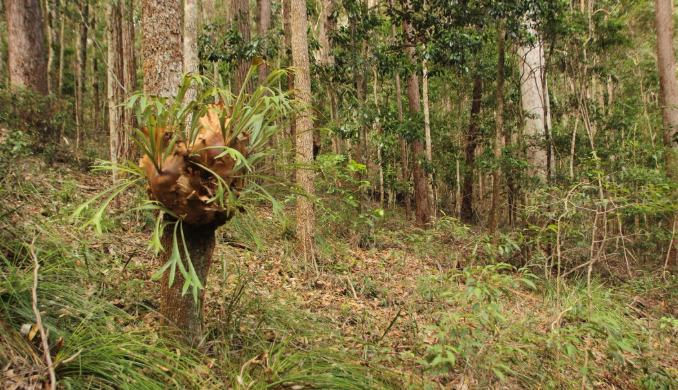
When most people hear the word “rainforest,” they think of a tropical place, like Borneo or the Amazon basin, that is lush, noisy, and far away. Part of the reason the temperate rainforest has been so easily lost is that it is more difficult to envision. The trees become so completely covered in lichens and mosses that it appears as though the forest is developing a second skin in these calmer, quieter areas that are shaped by Atlantic winds and continuous moisture.
UK Temperate Rainforest Restoration — Programme Overview
| Lead organisations | The Wildlife Trusts (national programme lead); Manx Wildlife Trust (Isle of Man); Cornwall Wildlife Trust — funded by Aviva with a £38.9 million commitment |
| Partnership duration | 50 to 100-year partnership between Aviva and The Wildlife Trusts — one of the longest corporate conservation commitments in British history |
| Isle of Man project site | Creg y Cowin, Baldwin Valley — 105 acres (42 hectares); 30,000 mixed-native trees planted by volunteers, completed two years ahead of the original five-year schedule |
| Cornwall project site | West Muchlarnick, near Looe — 150 acres; 30,000+ trees to be planted over 50 years; 19 species of lichen with UK International Conservation Responsibility recorded on site |
| Historical coverage | Temperate (Celtic) rainforest once covered approximately 20% of the British Isles; now reduced to less than 1% — among the rarest habitats on Earth |
| Tree species planted | Sessile oak, birch, rowan, holly, alder, willow, and hazel — all native species supporting lichens, mosses, fungi, red squirrels, pine martens, and rare birds |
| Time to full growth | Up to 50 years for full canopy maturity — most volunteers who planted the trees will not live to see them fully grown |
| Total programme target | Approximately 1,755 hectares of temperate rainforest restored across the British Isles; Isle of Man alone targeting 333,000 additional trees across multiple reserves |
| Reference / project details | The Wildlife Trusts — Temperate Rainforest Restoration |
Makepeace-Warne’s description is strangely accurate: “Plants growing on plants, growing on plants.” You’ll see what he means if you stroll through one of the remaining pieces in Wales or the western Scottish Highlands. Growth has furred the branches. Under green, boulders vanish. The entire area feels far removed from the surrounding typical countryside.
Approximately one-fifth of the British Isles were once covered by that habitat. Less than one percent is now covered. Over centuries, the land was cleared for agriculture, grazed into submission, and felled for timber. Eventually, only a few pieces remained along the country’s wetter, western borders, where farming was challenging enough for the trees to survive. Conservationists are now working backward from those fragments, using them as seed banks and nuclei around which larger woodlands can potentially regenerate.
The Creg y Cowin project is a part of something much larger than a single island. Supported by a £38.9 million commitment from Aviva, the Wildlife Trusts have been operating a Temperate Rainforest Restoration Programme throughout the British Isles. When you think about it, this is pretty amazing for an insurance company to do. The partnership lasts for fifty to one hundred years, which is longer than most corporate strategies are even conceivable, let alone financially supported.
The agreement might sound more transactional if Aviva believes it has real reputational and carbon-accounting value. Regardless of the reason, however, the money is real, the trees are being cut down, and another 150 acres of former farmland in Cornwall’s humid valleys near Looe are gradually being transformed back into what existed long before anyone considered clearing it.
Nineteen species of lichen were discovered during surveys at the West Muchlarnick site, where Cornwall Wildlife Trust is spearheading the restoration. Because these species are so rare, the UK is responsible for their international conservation. One of them, the floury dog lichen, adheres to bark in areas that resemble paint. The lichen running spider, a near-threatened species that has only been seen a few times in Britain, was discovered hiding on a branch against white growth in another survey. These animals lack charisma. They are not featured on the home page. However, they are signs that the old woodland’s ecological remains are still present and just need the correct circumstances to come back to life.
Sessile oak, birch, rowan, holly, alder, hazel, and willow are among the tree species that are purposefully native to both locations. They were picked not only because they are suitable for the wet Atlantic conditions but also because of the communities of life they sustain. In particular, sessile oak serves as a kind of biodiversity apartment building, supporting hundreds of insect species that feed birds like wood warblers and redstarts, which have been in decline for decades throughout Britain. These woodland types are also linked to species like pied flycatchers, pine martens, and red squirrels, which have retreated as the habitat has shrunk and can only reappear when there is sufficient connected woodland to support them.
Observing this type of project in action gives the impression that it follows a schedule that most conservation initiatives don’t. Makepeace-Warne said that some of the volunteers brought their kids to the last planting day at Creg y Cowin, and he thought it was wonderful that those kids would eventually return to a location that had developed into a true woodland with their own kids. It will take fifty years for the trees to reach full maturity. The majority of the volunteers who planted them won’t notice it.
Depending on how you interpret it, that is either quietly remarkable or depressing. Additionally, it acknowledges that some issues cannot be resolved on a quarterly cycle, that restoration proceeds at its own pace, and that planting is important even if the planter won’t be present to witness the outcome. In a way, it’s a more honest relationship with nature than most of what is referred to as environmental action.
