



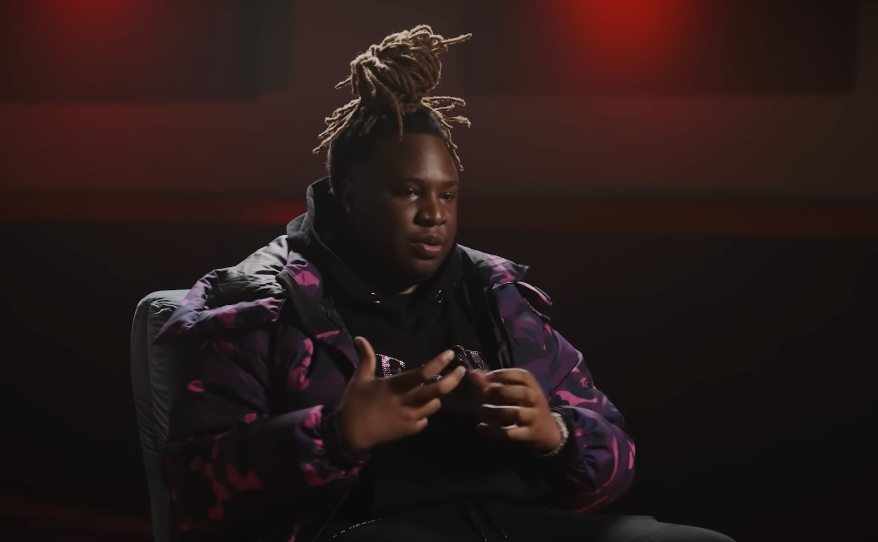
Almost every significant rap song from the past ten years has a scene where the beat slows down and a voice yells something clear. If you’ve spent any time around hip-hop in the past eight years, you know exactly which voice. Brytavious Chambers, the Memphis-born producer known to the world as Tay Keith, was the owner of that tag: raw, aggressive, and unforgettable. He died on June 18, 2026, at just 29 years old, in his Nashville apartment. And with his passing came an inevitable question: what was Tay Keith actually worth?
His net worth at the time of his death was estimated by the industry to be between $3 million and $5 million, but some reports indicate that when publishing rights, estate assets, and ongoing royalties are taken into consideration, the figure may have risen as high as $13 million. As is frequently the case with producers, the truth most likely resides in the middle. Producers hardly ever discuss money in public. Their earnings flow through publishing deals, sync licensing, and per-track fees that never make headlines.
The breadth of Tay Keith’s catalog was what made his financial situation truly intriguing. He didn’t just produce hits — he produced diamond-certified, culturally defining hits. Keith co-produced Travis Scott’s “Sicko Mode,” which peaked at number one on the Billboard Hot 100. Drake’s “Nonstop,” “Jimmy Cooks,” and “First Person Shooter” all bear his signature. BlocBoy JB’s “Look Alive” launched his mainstream career. He appeared on Beyoncé’s live album Homecoming. Eminem gave a call. When producers build up such a resume, the royalties continue even after the spotlight fades.

He signed a publishing deal with Warner Chappell Music, one of the most powerful music publishers in the world. Given the size and commercial significance of his catalog, that deal alone would have guaranteed consistent revenue long after any one song stopped being played on the radio. Over time, publishing rights accumulate. Songs are licensed for use in movies, TV series, commercials, and foreign markets. Worldwide, “Sicko Mode” is still utilized in content. This is important to comprehend how a producer’s wealth continues to rise, even in the background.
Tay Keith’s position within the larger hip-hop production economy is noteworthy. Established producers at his level typically charge anywhere from $25,000 to $100,000 per track for major label placements, sometimes more. Since 2015, Keith had been working steadily, and by 2018, he was simultaneously producing for the biggest names in the business. The math, even conservatively, adds up fast.
He also moved into executive production, most notably with Sexyy Red’s 2024 album In Sexyy We Trust. Executive production deals carry different — often larger — financial structures than standard beat sales. It showed Keith thinking about his career the way a businessman would, not just an artist. That trajectory was impressive for someone who began uploading beats to YouTube as a teenager in South Memphis.
After publishing assets, unpaid royalties, and any unfinished projects are fully evaluated, it is still unclear how his estate will be valued in the end. These kinds of figures take time to stabilize. What is clear is that Tay Keith built something real — not just culturally, but financially — in a very short window. He was 29 years old. The day after his passing, Key Glock’s album featured his final production credit.
Hip-hop lost a master craftsman at the pinnacle of his abilities. However, every stream, placement, and late-night car ride with “Sicko Mode” rattling the speakers is still producing something, and the beats he created are still playing somewhere. His legacy is still paying off in a number of ways.
