



On June 22, 2026, Clive Davis passed away at his Manhattan residence. He was ninety-four. His relatives attested to his recent hospital stay due to respiratory issues. At the time of his death, his estimated net worth was $600 million, the total of one of the most significant careers in American music history, built over more than 50 years in a field he helped completely transform.
He started as a lawyer. In the legend surrounding Davis as a pure talent spotter, that element is sometimes overlooked, but it is important because it sheds light on his methods. He understood contracts, leverage, and institutional power before he understood the music business, and when he combined that legal fluency with an ear for economic potential, the outcome was remarkably enduring. He became to president of Columbia Records in 1967 and quickly began signing or pushing acts that would characterize the cultural era – Janis Joplin, Santana, Bruce Springsteen, Billy Joel, Aerosmith, Chicago, Earth Wind & Fire. Columbia under his direction became the label you wanted to be on during the late 1960s and early 1970s.
In 1973, he was expelled under challenging public circumstances. Another executive might have retreated. In 1974, Davis returned by starting Arista Records, which he developed into something perhaps even more remarkable than what he had left behind. Whitney Houston, found and developed at Arista, became one of the best-selling performers in the history of recorded music.
Barry Manilow, Aretha Franklin, Dionne Warwick, Sarah McLachlan, Kenny G – the Arista roster covered an incredible spectrum, propelled by Davis’s faith that the proper blend of artist and commercial sensibility could create something that endured. He was consistently correct in ways that brought in money decades after the initial agreements were made.
Summaries of his career occasionally undervalue the hip-hop aspect. The Notorious B.I.G., Mase, Faith Evans, and 112 were brought into a label infrastructure by Arista’s partnership with Sean Combs and Bad Boy Records, which enhanced what Bad Boy was already constructing. Davis had witnessed enough genre swings in his career to know when something was moving, so he didn’t need to be an expert on hip-hop to comprehend its commercial destiny.
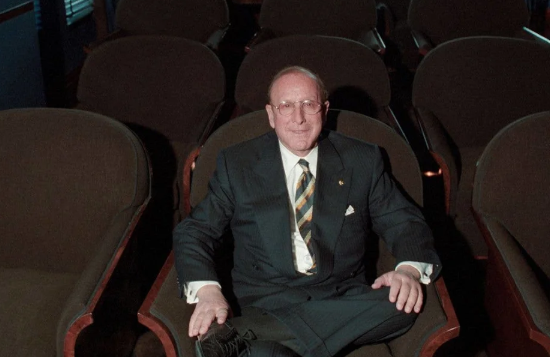
He created J Records in 2000, which produced Alicia Keys’s debut album nearly immediately. For most CEOs, that alone would have been a career. After that, he advanced to high positions at RCA, Sony BMG, and finally Sony Music Entertainment, where he held the position of chief creative officer until his passing. His yearly pre-Grammy celebration became become one of the most sought-after invitations in the entertainment business, a get-together where genuine musical love and industry power coexisted in a way that, by all accounts, felt true to him.
