



There’s a moment that tends to surprise people when they first hear it. Tom Cruise — one of the most recognizable faces in cinema history, a man whose films have collectively crossed $13 billion at the global box office — often walks into a negotiation and deliberately asks for less upfront. Not because he has to. Because he’s done the math.
It’s a strategy that took years to fully appreciate from the outside, but once you understand how it works, the numbers tell a story that feels almost counterintuitive. In an industry where actors fight for the biggest possible paycheck before cameras roll, Cruise built his fortune by waiting. By betting on himself. And by positioning his contracts in a way that most studios didn’t fully anticipate until the receipts were already in.
The mechanism is called a “first-dollar gross” deal, and it’s about as close to financial alchemy as Hollywood gets. Under this arrangement, Cruise earns a percentage of a film’s box office revenue starting from the very first dollar collected — before the studio deducts marketing costs, distribution fees, or production overruns. For most studios, this kind of deal is uncomfortable. They’re essentially writing a blank check against a film’s potential. For Cruise, it has been the engine of a fortune estimated at somewhere between $600 million and $891 million, depending on who’s doing the counting.
The evolution of this approach tracks neatly with his career arc. Early on, he was like everyone else — trading time for a flat fee. He earned $50,000 for Taps. Respectable for a newcomer, ordinary by any other measure. By the time Interview with the Vampire arrived in 1994, that number had climbed to $15 million. Still a salary. Still finite. Then came Mission: Impossible in 1996, and something shifted permanently.
Cruise reportedly took a more modest upfront fee in exchange for backend participation on that first MI film, eventually walking away with an estimated $70 million. The franchise had barely begun, and he’d already rewritten his own financial playbook. Mission: Impossible 2 and War of the Worlds each reportedly cleared $100 million in his pocket. Not salary — participation.
It’s worth pausing on that number, because the word “participation” doesn’t quite capture the weight of it. He wasn’t just getting a bonus. He was, in practical terms, functioning as a co-investor in his own films — one who happened to also star in them, produce them, and sometimes hang off the side of aircraft during principal photography.
That last part matters more than it might seem. Cruise’s insistence on performing his own stunts — something studios have historically opposed for insurance reasons — has become a brand signal. Audiences have learned to trust that what they’re watching is real. That authenticity has translated into repeat business, word of mouth, and the kind of loyalty that makes a studio willing to offer a backend deal in the first place. You don’t hand someone a percentage of your gross unless you believe they will make that gross significantly larger.
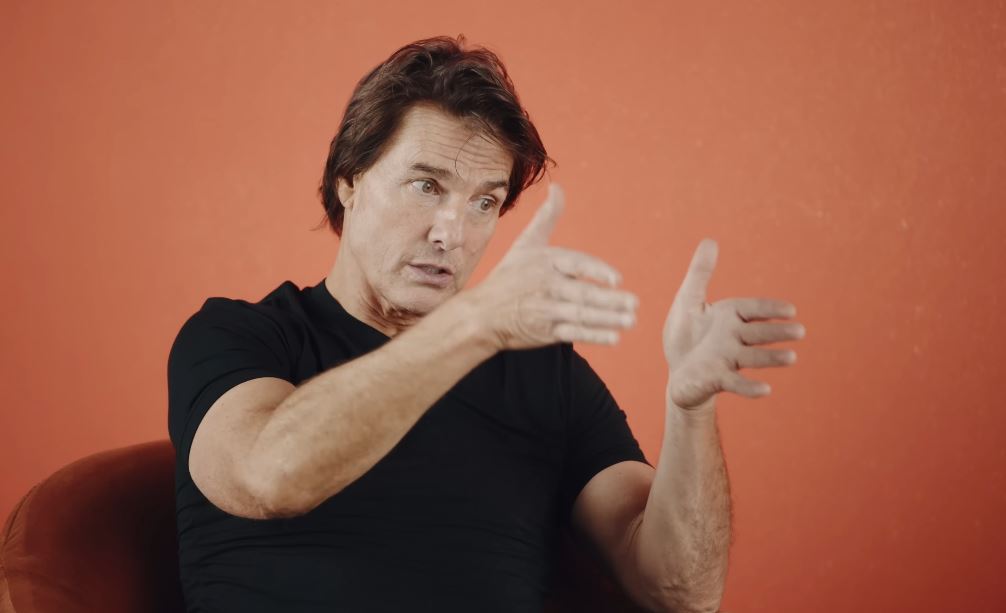
The formation of TC Productions, his production company, deepened this arrangement further. By maintaining creative and financial control over the Mission: Impossible franchise, Cruise wasn’t just the star anymore — he was effectively the custodian of the IP, the person most invested in its longevity. It’s a structure that allowed him to earn a reported $150 million from Mission: Impossible – The Final Reckoning in 2025 alone, a figure that combines producer fees, backend percentages, and other deal elements that a conventional salary structure would never have reached.
There was a turbulent chapter in between all of this — the mid-2000s, the very public split from Paramount, the United Artists experiment that didn’t survive contact with reality. It’s possible that period shaped his business instincts more than any single successful deal. He came back from it not by fighting the studio system harder, but by returning to his core offering, doing what he does better than anyone else, and letting the box office make his argument for him. Ghost Protocol hit nearly $700 million worldwide. That answer was definitive.
What Cruise figured out — slowly, then deliberately — is that in Hollywood, the real leverage doesn’t come from demanding more upfront. It comes from making yourself indispensable to the outcome. When the film succeeds because of you, the percentage you negotiated before production begins suddenly becomes something else entirely. It becomes ownership.
