



A certain type of business decision appears to be a failure from the outside but appears to be brilliant in retrospect. That includes Shopify’s decision to shut down its logistics division and sell off Deliverr and 6 River Systems in May 2023.
It appeared to be a disorganized retreat. Just a year earlier, the company paid $2.1 billion to acquire a startup, spent years and billions building a fulfillment network, and then sold the majority of it to freight company Flexport while laying off 20% of its employees. Nevertheless, Shopify’s stock saw its largest intraday increase since 2015 on the day that the news broke, rising 23%.
It appears that markets were relieved. It’s important to comprehend Shopify’s journey into logistics and the reasons behind its eventual departure, not because it was a disastrous event but rather because the exit was motivated by more careful considerations than the initial entry.
The pitch made sense when Shopify introduced its fulfillment network in 2019. Amazon, a business with one of the most powerful delivery systems ever created, was a rival to the platform’s merchants. With the same speed, cheaper prices, and improved technology, Shopify aimed to give its sellers a competitive edge. In the same year, it acquired six River Systems to support its pledge to spend $1 billion over a five-year period. The aspiration was sincere.
The execution, however, was a different matter. In essence, Shopify acted as an intermediary, brokering warehouse space from third-party providers rather than owning the facilities outright. This is what logistics experts refer to as a 4PL model. The goal was to continue being technology-driven and asset-light. In actuality, this meant that Shopify was attempting to manage a patchwork of outside partners without having direct control over the caliber or consistency of what merchants encountered. The seams were visible.
Consulting firms began to see a trend. Shopify’s fulfillment network was being abandoned by merchants, who were also complaining about poorly functioning technology and disorganized rather than smooth coordination. Instead of making shipping easier, the model was adding layers.
Shopify might have underestimated the differences between the digital world of software and the physical world of logistics. Implementing a code update is not the same as operating a warehouse. Logistics entails pen and paper, phone calls, and service providers who don’t naturally communicate with one another, as Shopify CEO Tobi Lütke himself wrote to staff members. Elegant technological solutions are difficult to implement in such a friction-heavy environment, at least not very quickly.
For a while now, analysts had been voicing concerns. Ken Wong of Oppenheimer had observed that the fulfillment investment was “the biggest anchor” preventing the company from becoming more profitable. That statement sums up something true: Shopify is fundamentally a software business with scalable infrastructure and large profit margins. Physical volume and narrow profit margins are the foundation of logistics. It is not natural for the two business models to coexist in one location.
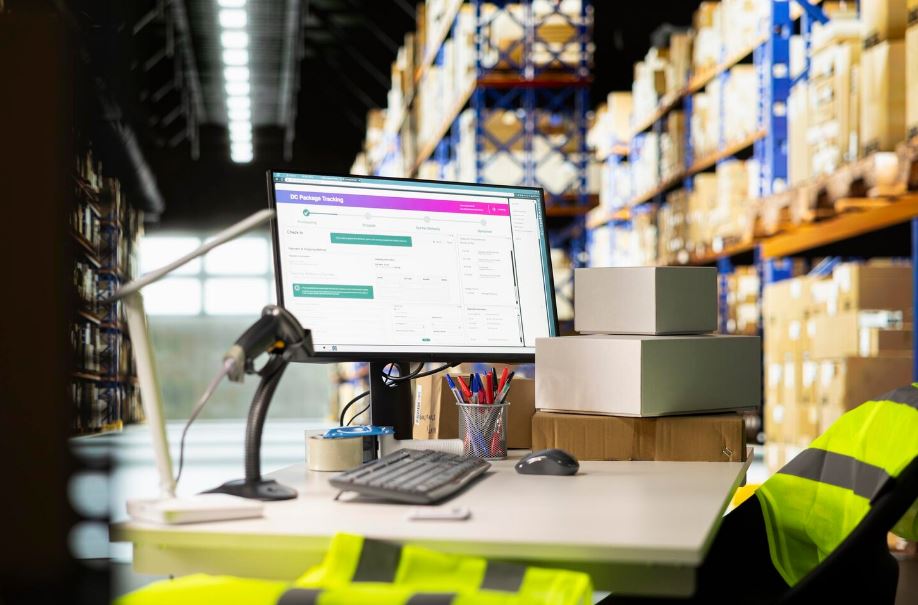
Lütke referred to logistics as a “side quest” when he made the announcement of the sale; this admission is remarkably candid for a corporate press release. He claimed that during the previous year, the company had been “subtracting everything” that stood in the way of Shopify’s primary goal, which is to be the greatest platform for retailers to establish their stores. The language is important. This was not progress disguised as a pivot. It was an acknowledgement that focus had been lost and that making tough decisions was necessary to regain it.
The rest of the story was revealed by the response of the stock market. On the day it announced layoffs and a significant divestiture, Shopify’s stock reached its highest point of the year. It’s not a coincidence. The abandonment of ambition and the loss of employees were not being celebrated by investors. They were reacting to clarity—a business going back to what it does well, cutting out a costly diversion, and offering a more straightforward route to financial success.
It remains to be seen if Shopify’s decision to concentrate on e-commerce software will be sustainable in the long run. The competition in the platform space is constantly changing, and the company is placing bets on AI and sustained merchant growth. Looking back at the entire story, however, there’s a feeling that the expensive logistics detour may have helped Shopify better understand its own identity in ways that years of smooth sailing could never have. Sometimes the most important lesson a business learns is what it isn’t.
