



When people first hear it, there’s a detail that usually stops them in the middle of a conversation. When traveling at 28,000 kilometers per hour, a piece of orbital debris the size of a marble—something you could lose in a couch cushion—carries about the kinetic energy of a hand grenade. There are currently a lot of those marbles in Low Earth Orbit. Actually, hundreds of thousands of them. And in the center of that field are the satellites that track climate patterns, route your phone calls, and guide your GPS.
Although the issue of space debris has been growing for decades, the financial implications have recently changed. The Space Futures Center, in collaboration with the World Economic Forum and the Saudi Space Agency, produced a report at the Space Debris Conference 2026 that provided a precise estimate of the possible harm. The space industry could lose between $25.8 billion and $42.3 billion over the next ten years if the debris problem is not resolved.
That is not a theoretical forecast intended to scare decision-makers. The estimate is based on actual operational costs, such as fuel used for avoidance maneuvers, heavier shielding added to satellites during launch, increased insurance premiums in high-congestion orbital zones, and the compounding risk of what scientists refer to as the Kessler Syndrome, a chain-reaction scenario in which one collision causes enough new debris to cause more collisions, ultimately rendering entire orbital altitudes unusable.
These expenses are becoming unavoidable, which is why the space debris cleanup sector is growing. Startups like Kall Morris Inc. and Starfish Space are creating vehicles that can pick up and remove obsolete satellites from orbit. In order to prevent debris-removal spacecraft from becoming disposable after a single mission, Orbit Fab is developing infrastructure for refueling. Daniel Faber, CEO of Orbit Fab, stated at a recent SpaceCom conference in Orlando that the reasoning is simple: you don’t want to purchase a brand-new tow truck, use it once, and then discard it. Only when the tools themselves are reusable do the economics make sense.
The difference between the apparent need and the willingness to pay is what makes the industry truly fascinating and complex. Before making a significant financial commitment, the Pentagon, which is frequently the presumed anchor customer for this type of dual-use technology, wants to see more developed systems. Commercial satellite operators are not persuaded that prolonging a satellite’s life or clearing its orbital neighborhood is worth the cost, especially those operating large constellations in low-Earth orbit (LEO) where satellites are relatively inexpensive and built to be replaced.
It’s difficult to find people who will pay to clean up the town square, but people do try to take out the trash in their own backyard, according to Michael Madrid of Starfish Space. With billions of dollars invested in particular orbital slots, large constellation operators may eventually change their minds about keeping those neighborhoods unobstructed.
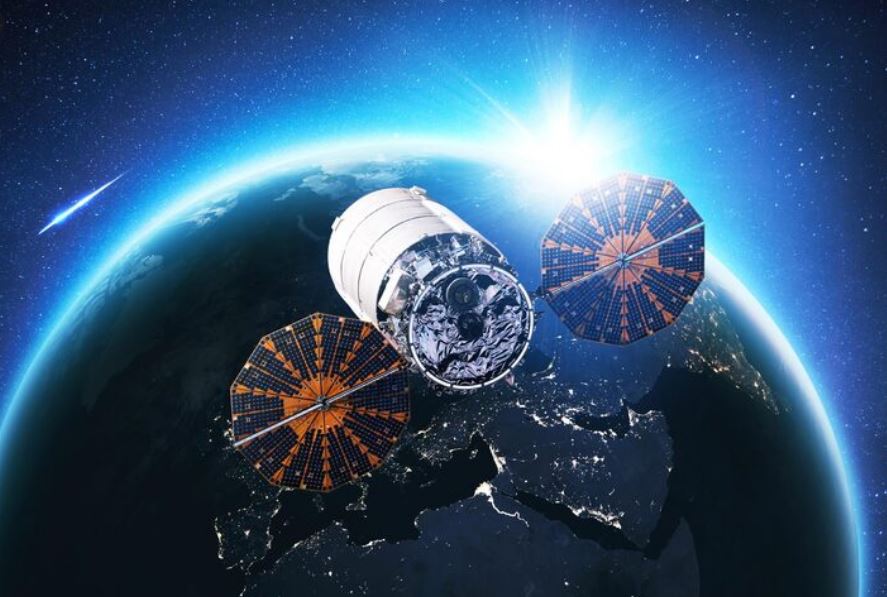
The industry is also keeping a close eye on regulatory pressure. Although active debris removal is not officially recognized by the FCC as an equivalent compliance method, LEO satellites are currently required to deorbit within five years of mission completion. Businesses like Orbit Fab want to close that gap. According to Faber, the industry would initially be terrified by a mandatory 100% cleanup requirement, which is understandable given current costs. However, it would also force the creation of economies of scale that do not yet exist.
Even though the market numbers are still small in absolute terms, they are clearly trending in the right direction. The market for space debris removal was estimated to be worth $143 million in 2025 and is expected to reach $9.57 billion by 2035. Earlier this year, two businesses announced a partnership with the stated objective of introducing a repeatable debris removal service by 2027. Whether or not the commercial demand will emerge quickly enough to support the investment is still up in the air. However, the direction seems certain.
Seeing an industry develop around cleaning up a mess that everyone contributed to but no one was directly accountable for has a subtle significance. No single nation or business owns the debris up there. Over the course of sixty years of launches, experiments, and collisions, it accumulated. And now a market is being created under the presumption that someone will eventually pay to have it fixed. Currently, one of the more significant unanswered questions in the space economy is whether that occurs quickly enough to safeguard the satellite infrastructure that the modern world has come to rely on.
