

Close Menu
CovMediaCovMedia
    What's Hot

    Adobe’s Figma Acquisition Failure: How European Regulators Killed the Biggest Software Deal of the Decade

    July 17, 2026

    Michael Jordan’s Charlotte Hornets Sale: Breaking Down the $3 Billion Profit of the Greatest Athlete Investor

    July 17, 2026

    The Space Debris Cleanup Industry: The Multibillion-Dollar Market for Protecting Satellites in Low Earth Orbit

    July 17, 2026
    Facebook X (Twitter)
    CovMediaCovMedia
    • Home
    • Trending
    • Banking
    • Economy
    • FinTech
    • Game
    • Investments
    • Markets
    • Tech
    CovMediaCovMedia
    Home » The Deep Sea Mining Controversy: The Trillion-Dollar Industry Waiting at the Bottom of the Pacific Ocean
    Investments

    The Deep Sea Mining Controversy: The Trillion-Dollar Industry Waiting at the Bottom of the Pacific Ocean

    Sam AllcockBy Sam AllcockJuly 17, 2026No Comments4 Mins Read
    Facebook Twitter Pinterest LinkedIn Reddit WhatsApp Email
    The Deep Sea Mining Controversy, The Trillion-Dollar Industry Waiting at the Bottom of the Pacific Ocean
    The Deep Sea Mining Controversy, The Trillion-Dollar Industry Waiting at the Bottom of the Pacific Ocean
    Share
    Facebook Twitter Pinterest Reddit WhatsApp Email

    When you watch footage from the Pacific Ocean’s bottom, an odd thing happens. Transparent worms, spectral corals, and sea cucumbers floating like abandoned artifacts are among the creatures that appear to be from a different planet. It is completely dark. It’s crushing pressure. Millions of potato-sized metal lumps that have been silently forming for tens of millions of years are dispersed throughout the seafloor in what resembles a pebble driveway.

    One of the more intricate resource disputes of our day revolves around those lumps.

    The Metals Company, a company that claims to be at the forefront of this industry, recently started private talks with the Trump administration to avoid the United Nations body that oversees international seabed rights, bringing the long-brewing Deep Sea Mining Controversy into sharper relief. Environmental organizations protested the move, several countries responded diplomatically, and there was a predictable wave of confusion about who exactly has the power to approve mining in waters that technically belong to no one.

    The metals in question—copper, cobalt, nickel, and manganese—are also required for military hardware, batteries for electric vehicles, and a variety of technologies that governments are increasingly viewing as strategic necessities. The demand for these minerals is expected to increase significantly over the next several decades, according to projections made by the International Energy Agency.

    Companies have been drawn to the Clarion-Clipperton Zone, a large area of the Pacific Ocean between Mexico and Hawaii where seafloor nodules are most concentrated, based solely on that forecast. The entire amount of what’s down there is estimated to be worth sixteen trillion dollars. It’s the type of number that tends to irritate people.

    The engineering involved is truly remarkable. The nodules are effectively vacuumed up, miles of industrial tubing are extended toward the seafloor, and a bus-sized robot is lowered from a ship. The Metals Company showed journalists from The New York Times three-dimensional models of their machinery, which says something about transparency or how desperately they need positive press at this time. At least under test conditions, the technology functions. It is still very much up for debate whether it can operate profitably on a commercial scale without causing catastrophic environmental harm.
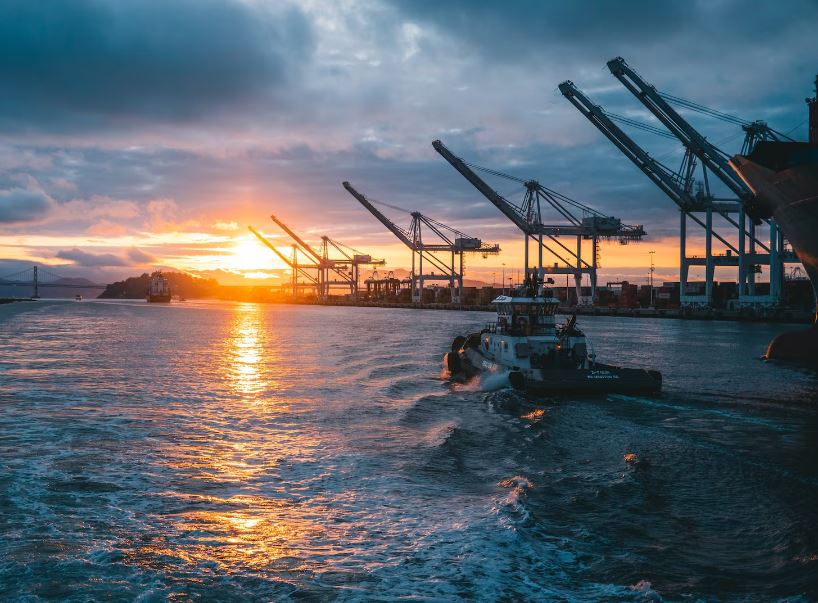
    The Deep Sea Mining Controversy, The Trillion-Dollar Industry Waiting at the Bottom of the Pacific Ocean
    The Deep Sea Mining Controversy, The Trillion-Dollar Industry Waiting at the Bottom of the Pacific Ocean

    Environmentalists contend that mining the seafloor would permanently damage one of the planet’s least understood ecosystems. In what The Metals Company described as intentional interference, Greenpeace, which has been especially vocal in its opposition to the company, boarded one of its research ships in the Pacific. In response, the company worked to have Greenpeace removed from its observer status in the International Seabed Authority, a UN body that was established thirty years ago and has since been ratified by over 160 countries. Just that disagreement sums up the tone of the entire discussion.

    Even though it isn’t entirely convincing, there is an industry argument that should be taken seriously: land-based mining has a negative past. Destroyed communities, poisonous runoff, and child labor. The argument is that there may be less overall harm if deep-sea mining lowers demand for terrestrial mining. Environmentalists argue that rather than replacing current land mining, deep-sea operations would only increase it. Which scenario is more likely is still unknown and most likely won’t be until the industry is up and running.

    There’s no denying that the discourse has changed. Businesses that previously presented this as a clean energy story are now using language related to national security because China holds a sizable portion of the world’s essential mineral supply and there is actual geopolitical pressure. It is difficult to determine whether that framing is strategic or genuine. Most likely both.

    Even with US licenses possibly on the horizon, commercial deep-sea mining is still years away from reaching large-scale operations. Commercial fleets do not yet exist. The nodules cannot be processed by many refineries. Environmental organizations are likely to file legal challenges, and a change in US administration could completely change the direction. Regardless, the ocean floor will remain patient in a way that can only be measured in geological time. The question is whether the decision-makers are working on a comparable timeline or one that is significantly shorter.

    Deep Sea Mining Controversy Pacific Ocean
    Share. Facebook Twitter Pinterest LinkedIn WhatsApp Reddit Email
    Previous ArticleElton John’s Farewell Tour Windfall: The $900 Million Gross That Redefined Legacy Artist Retirement
    Next Article Airbnb’s Regulatory Nightmare: How City-Wide Bans in New York and London Are Hurting the Bottom Line
    Sam Allcock
    • Website
    • X (Twitter)
    • LinkedIn

    Related Posts

    Michael Jordan’s Charlotte Hornets Sale: Breaking Down the $3 Billion Profit of the Greatest Athlete Investor

    July 17, 2026

    The Space Debris Cleanup Industry: The Multibillion-Dollar Market for Protecting Satellites in Low Earth Orbit

    July 17, 2026

    The Washington D.C. Defense Boom: How the Return of Great Power Competition is Minting New Aerospace Billionaires

    July 17, 2026

    Comments are closed.

    Top Posts

    How to Get Cricfy TV Download for Smart TV Apps Without the Play Store

    April 20, 202517,710 Views

    Jay Kay Net Worth, Inside the $70 Million Life of the Funk Icon with 22 Cars and a Buckinghamshire Mansion

    July 11, 2025501 Views

    Rory McPhee Net Worth Revealed – Mel B’s Husband Is Secretly a Millionaire!

    July 31, 2025488 Views

    Character AI No Filter: The Secret Trick That’s Changing AI Conversations Forever

    April 16, 2025404 Views
    Don't Miss
    FinTech

    Adobe’s Figma Acquisition Failure: How European Regulators Killed the Biggest Software Deal of the Decade

    By Sam AllcockJuly 17, 2026

    Adobe’s stock dropped 17% on the day it revealed it was purchasing Figma for about…

    Michael Jordan’s Charlotte Hornets Sale: Breaking Down the $3 Billion Profit of the Greatest Athlete Investor

    July 17, 2026

    The Space Debris Cleanup Industry: The Multibillion-Dollar Market for Protecting Satellites in Low Earth Orbit

    July 17, 2026

    The Mexican Peso Surge: How “Nearshoring” Turned the Latin American Currency Into a Global Powerhouse

    July 17, 2026

    Subscribe to Updates

    Get the latest creative news from SmartMag about art & design.

    Our Picks
    About Us
    About Us

    Stay informed with CovMedia's latest business and finance updates. For queries, contact editor@covmedia.co.uk. Empowering you with accurate insights and news.

    Our Picks

    Adobe’s Figma Acquisition Failure: How European Regulators Killed the Biggest Software Deal of the Decade

    July 17, 2026

    Michael Jordan’s Charlotte Hornets Sale: Breaking Down the $3 Billion Profit of the Greatest Athlete Investor

    July 17, 2026

    The Space Debris Cleanup Industry: The Multibillion-Dollar Market for Protecting Satellites in Low Earth Orbit

    July 17, 2026
    Most Popular

    Steve Clarke Salary Scotland: Was He Worth Every Penny the SFA Paid?

    July 14, 20264 Views

    The Swiss Banking Consolidation: What the UBS and Credit Suisse Merger Means for the Future of Hidden Wealth

    July 14, 20264 Views

    Keir Starmer’s Financial Disclosures: What the UK Prime Minister’s Net Worth Reveals About Modern British Politics

    July 16, 20264 Views
    © 2026 ThemeSphere. Designed by ThemeSphere.
    • About Us
    • Contact Us
    • Privacy Policy
    • Terms and Conditions

    Type above and press Enter to search. Press Esc to cancel.