



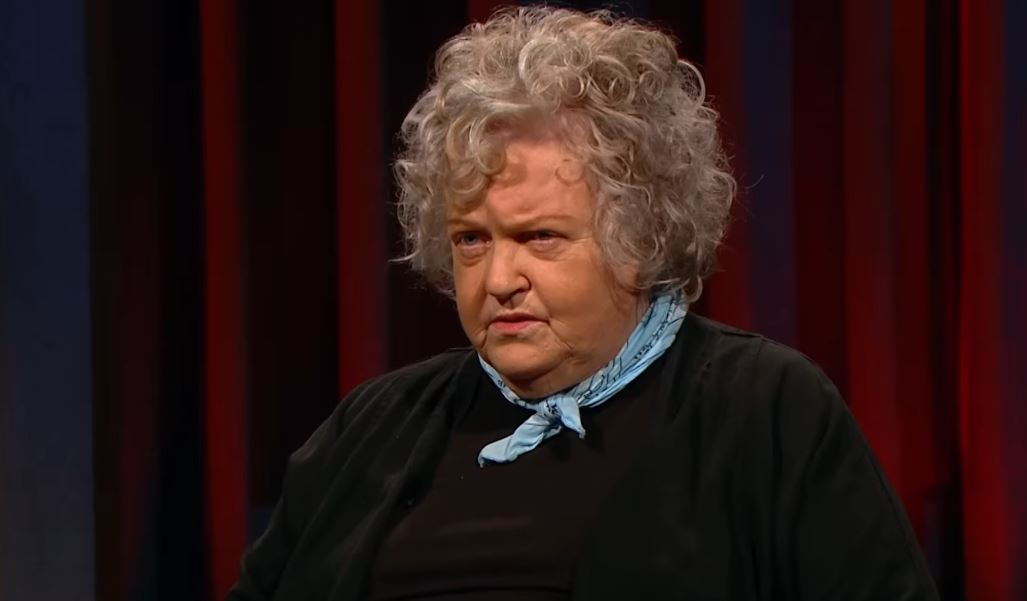
Brenda Fricker’s life has a subtle dissonance to it. On one hand, she won an Academy Award in 1990 — the first Irish actress ever to do so — and spent the following years working in some of Hollywood’s most commercially successful films. On the other, she sat down in 2012 for a television interview and told the world, with characteristic plainness, that she was completely broke. No drama. No performance. Just the truth as she perceived it.
Eighty-one years after her birth, Fricker died on July 16, 2026, in Dublin. Tributes from coworkers and supporters poured in over the next few days. And inevitably, the conversation turned to what she had left behind — financially speaking.
The honest answer is: nobody is entirely sure. Celebrity wealth estimates have always been a bit of a game, and in Fricker’s case, the numbers vary quite a bit. Some sources placed her net worth at death somewhere between $3 million and $5 million. Others, pointing to her vast body of work spanning six decades of film and television, greatly increased that number. According to one estimate, the amount could reach $11 million. With the exception of that open admission in 2012, Fricker, who was notoriously private about her finances, never verified any of these numbers.
What’s certain is that her career had breadth and staying power that most actors never achieve. She began appearing on screen in the mid-1960s, working through British and Irish television before landing international recognition with My Left Foot in 1989. Her performance as Bridget Brown, the indefatigable mother of painter and writer Christy Brown, earned her the Oscar for Best Supporting Actress. In her acceptance speech, she dedicated the award to Brown’s own mother — a woman who had given birth twenty-two times. The line struck with the directness and warmth that characterized Fricker’s entire on-screen persona.
The Oscar made things possible. She went on to appear in Home Alone 2: Lost in New York in 1992, playing the Central Park Pigeon Lady — a role that introduced her to an entirely new generation of viewers who may not have known her name but recognized her face immediately. It’s possible that her association with a film that gets replayed on television every Christmas season added more to her cultural footprint than it did to her bank account. Royalties from legacy projects are notoriously difficult to track.
She had taken a break from major Hollywood productions at the time of her 2012 admission that she was broke. She claimed that until her savings ran out, she had been living off of them. She told the interviewer, “I’m perfectly content as long as I have a roof over my head and can feed the dog and feed myself.” It was the kind of statement that rang completely true coming from her — someone who had survived far harder things than financial uncertainty, as her 2025 memoir She Died Young made painfully clear.
One could legitimately argue that Fricker’s wealth increased in her later years. She resumed significant roles, most notably in Tadhg O’Sullivan’s The Swallow in 2024 and the television version of Holding, which was based on Graham Norton’s book, in 2021. These were not insignificant appearances. It is more difficult to determine whether they substantially restored her financial situation. How much of her estimated estate was linked to Dublin real estate, pension benefits, or royalties from previous employment is still unknown.
In the end, the figures indicate that Brenda Fricker never amassed wealth in the manner that Hollywood celebrities who pursue blockbusters typically do. From the outside, it appears that she made decisions based on the work itself. A peaceful life in Dublin with a Guinness nearby, a dog to feed, and poetry to read. According to her own calculations, that was sufficient.
Her legacy is not primarily monetary. It sits in a specific performance — a woman watching her son with quiet ferocity on a Dublin street — and in the fact that she never once seemed to be playing anything other than the truth.
