



Seeing a player go from making less than a thousand euros a week to signing a contract worth possibly five million euros annually—all before turning twenty-one—is quietly amazing. That roughly sums up Jobe Bellingham’s career trajectory thus far. Jobe has been gradually establishing his own case on his own terms, even though the Bellingham name has carried a lot of weight since his older brother Jude became one of football’s biggest stars.
It’s worth taking a moment to consider the numbers. During the 2022–2023 season, Jobe’s weekly salary at Birmingham City was approximately £962. As might be expected for a teenager just starting out, it was entry-level. That amount increased over the next two seasons at Sunderland, reaching £6,500 per week in 2023–2024 and £12,500 per week in 2024–2025. sensible advancement. The kind of pay curve that indicates a club is paying attention but doesn’t make news.
The numbers completely changed when Borussia Dortmund moved in June 2025.
Twelve months ago, Dortmund would have seemed ambitious for a 19-year-old midfielder, but they agreed to pay Sunderland an initial €32 million plus up to €5 million in add-ons. Jobe’s contract, which came with the move, gives him a base salary of about €3 million annually and locks him in until June 2030. That cap rises to about €5 million a year when performance bonuses are taken into account. According to some estimates, including data from Capology, his weekly salary for the 2026–2027 season is approximately €90,769, or nearly €113,000 when bonuses are taken into account.
How soon those bonuses will be activated and what standards Dortmund has established are still unknown. Jobe has a realistic route to the higher end of that range because BVB is a team that regularly plays Champions League football, and performance clauses at this level are typically linked to appearances, goals, and European involvement.
The deal’s actual structure is what’s intriguing. A five-year deal for a player who had only played in the Championship for two seasons shows Dortmund thinks they are purchasing ahead of market value rather than at peak. The club has made similar bets in the past, such as when Jude Bellingham went through Signal Iduna Park before moving to Real Madrid. These bets typically show a sincere belief in a player’s potential rather than just their current performance.
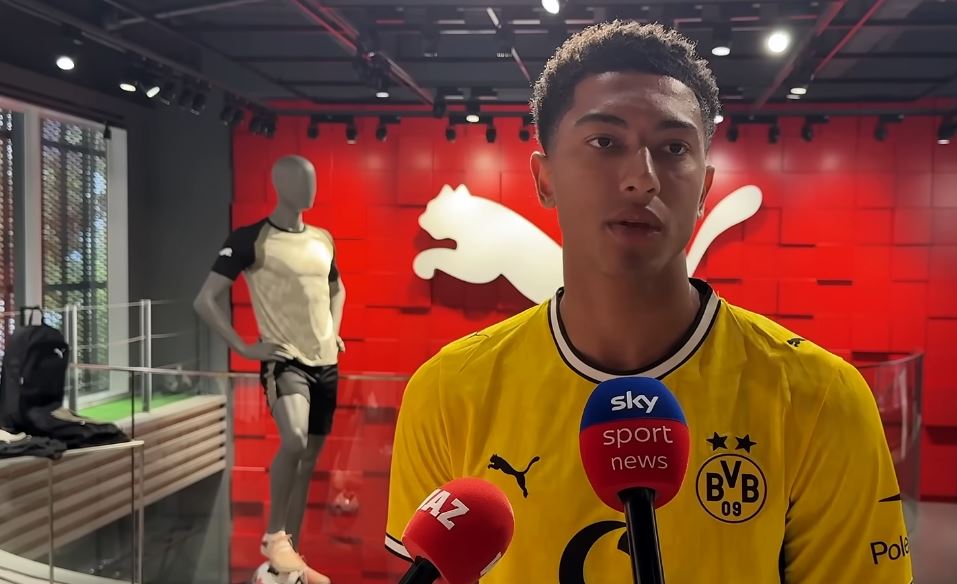
During the FIFA Club World Cup, Jobe made his debut for the German team. He entered the game against Fluminense and completed 26 of 28 passes in 31 minutes, impressing onlookers with a 93% accuracy rate. Although it was a small sample, it validated what Sunderland observers had been observing for the previous two seasons: this player possesses maturity beyond his years.
There is a temptation to evaluate Jobe solely based on his brother’s achievements. That’s probably unfair to him, and it’s also not very helpful. The salary data actually reveals a player whose market value has increased at a rate that is consistent with real output rather than merely inherited reputation. Due to the last name, Dortmund did not pay €33 million. The on-pitch evidence presented a plausible case, so they paid it.
Jobe Bellingham’s financial story is still in its early stages at the age of 20, with four years left on his contract and a salary that increases gradually as the seasons go by. What happens in the Bundesliga, in Europe, and in a shirt with the number seven will determine whether it ultimately appears to be a deal or a risk.
