



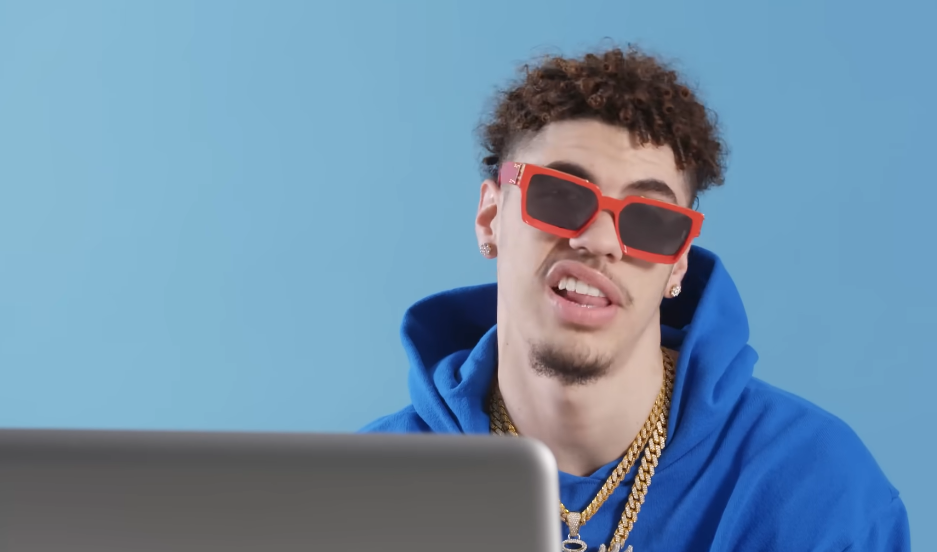
The financial trajectory of LaMelo Ball’s career has been anything but typical at one point, somewhere between witnessing a nineteen-year-old manage a professional basketball team from abroad and seeing that same kid sign a quarter-billion-dollar contract. He played in Australia’s NBL, skipped college, bounced through Lithuania, and was selected third overall in the 2020 NBA Draft. He is now among the highest-paid young players in the game five years later, and he recently made one of the summer’s most talked-about trades.
With a salary of $35.14 million for the 2024–2025 season, LaMelo Ball was already well within the league’s top earners. That number climbed to $37.96 million in 2025-26, and the trajectory doesn’t flatten anytime soon. By the time the contract peaks, Ball is set to earn north of $46 million in a single season — which, even in today’s inflated NBA economy, is a number that stops people mid-conversation.
The contract at the center of all this is the five-year Designated Rookie Extension he signed with the Charlotte Hornets in July 2023. With incentives included, the base value of about $203.85 million could increase to $260 million by 2029. To put things in perspective, that’s a substantial amount for a player who, at the time of signing, had only completed three NBA seasons. It speaks to how much the Hornets believed in him — and perhaps, in hindsight, how complicated that belief became.

What’s interesting now is that Ball no longer wears a Hornets uniform. In the days preceding the 2026 offseason, Charlotte traded him to the Minnesota Timberwolves, a decision that completely changed both teams. A long, creative guard who can make plays that most players just don’t see was acquired by Minnesota. In addition to future assets, Charlotte acquired Naz Reid, a big man who fits their rebuild. Ball’s $40.77 million salary for the 2026–27 season was subject to a 15% trade bonus as part of the deal; however, league regulations limit his actual compensation to 25% of the salary cap. These are the kinds of contractual details that rarely surface in highlight reels but matter enormously in front offices.
There’s a feeling that Charlotte, led by Jeff Peterson, president of basketball operations, did not make this decision in a hurry but rather as part of a longer, more planned rebuild. The Hornets overachieved last season by most external measures, and the franchise seems to be resetting rather than scrambling. The deck was cleared by Ball’s departure and Miles Bridges’ trip to Phoenix. What Charlotte does with that massive $40.7 million trade exception — reportedly the largest in NBA history — over the next year will say a lot about Peterson’s actual vision.
For Ball himself, the money tells one story and the basketball tells another. His NBA salaries and a $100 million, ten-year contract he signed with PUMA after splitting from his family’s Big Baller Brand have contributed to his estimated $40 million net worth. According to most accounts, the deal has been a true commercial success and includes his own signature shoe line, the MB series, which is currently in several iterations. That kind of off-court earning power at 24 is rare, and it’s worth noting.
LaMelo has undoubtedly outperformed the other Ball brothers in terms of money. Lonzo, the eldest, has spent years battling knee injuries that derailed what looked like a promising career with the Chicago Bulls. LiAngelo was never able to establish a long-term NBA presence. Despite being the youngest, LaMelo emerged as the star, the breakout, and now the one whose contract details are discussed on Tuesday night at 11 p.m. on basketball Twitter.
Watching all of this unfold, it’s hard not to appreciate the odd, winding path that led here. A young man who never attended college and played professionally in Europe as a teenager now commands one of the highest salary obligations in the Western Conference. For one of the most exceptionally talented passers in the game, Minnesota will be paying more than $40 million annually. It remains to be seen if that investment yields championships or postseason runs. However, the financial commitment? It’s already locked in.
