



During most reunion tours, you can tell if the band really wanted to be back together or were just there to make money. When I was at Dickies Arena in Fort Worth and watched Geddy Lee jump around on stage during “Freewill,” I knew the answer was pretty clear. Rush was keen on being here. The crowd, which was mostly men and very emotional, wanted them there even more.
But to get to that point, you had to be very patient, which is something that only Rush fans could do. The band was supposed to start their four-night stay in Fort Worth on June 24. It wasn’t. The opening night was moved to July 2 because of problems with travel and delays at the border with their gear. Then, just hours before the new show, there was another announcement: Geddy Lee had been diagnosed with bronchitis and laryngitis. The new dates for June 30 and July 2 are July 11 and July 13.The old dates were moved back. Over two months went by before the first note was played in Texas. It would have been bad for any other band if they did that. In some way, it seemed to make it stronger.
Rush has always gotten a certain kind of devotion. Not the kind of casual love you might have for a band you liked in high school. Something more like loyalty. Fans were more forgiving than angry when Lee and Alex Lifeson posted a short video from inside Dickies Arena in which they looked embarrassed, sincere, and sorry. Before that, the band had been on tour for more than fifty years and had very few cancellations.
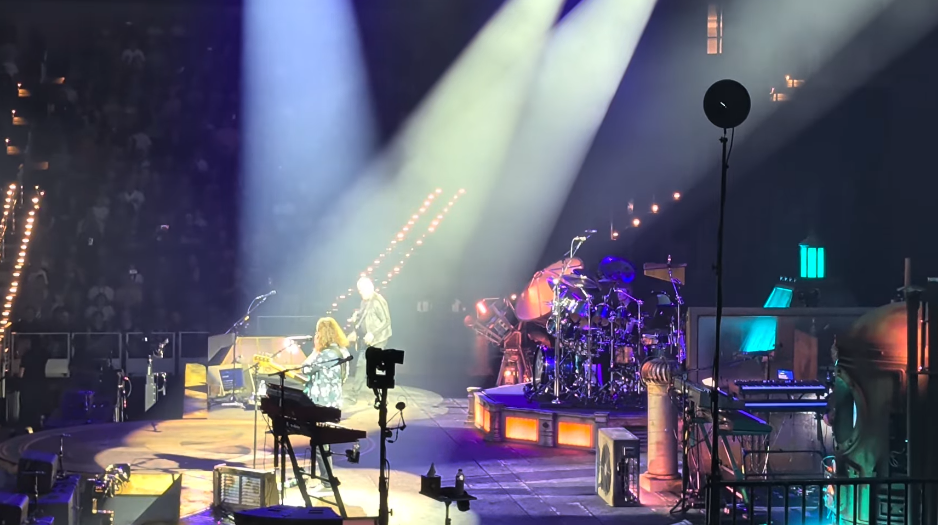
Once the big night, June 26, came around, the show didn’t waste any time getting to the point. “Xanadu” started the set, and the long instrumental parts swept over the crowd, who had been waiting a long time. Now that the band was bigger than a classic trio, German drummer Anika Nilles filled in for the late Neil Peart, who died in 2020. Nobody can really be a drummer in that role, and Nilles did the right thing by not trying. She showed amazing technical skill without trying to copy him note-for-note. The bells and glockenspiel were no longer there. There were a lot of chops.
It also helped that keyboardist Loren Gold was there. Gold has been touring for years with The Who. Most people couldn’t see what he was doing because he was hidden away working on the synthesizer, but it had a big impact. Lee moved around the stage with a genuine sense of freedom, no longer having to play the keyboard like he had on previous tours. His bass playing, especially during “Red Barchetta” and “Freewill,” was strong and punchy, reminding us that he is still one of rock’s most unique low-end players.
Lee’s voice is different. It stays together in the middle range, and there are times when it sounds good, even strong. But the highest notes aren’t as clear as they used to be, and you can hear the strain sometimes. There’s nothing majorly wrong with it—Robert Plant made the same change years ago and sounded better for it—but it’s something to keep in mind. Rush has never been a band that hid behind their music. Being honest works both ways.
Neil Peart was there all night and wasn’t used in any way. In between songs, tribute videos showed up. They were tasteful in a way that could have easily turned sad. His lyrics, on the other hand, were really moving. “The Garden,” which came near the end of the set, had a weight that the crowd could feel without being told. And when “The Spirit of Radio” came on, thousands of people sang words written by a man who hasn’t been seen in six years in a venue that had seen this band play for the first time more than fifty years before.
That’s why it’s hard to sum up the Rush concert in Fort Worth with a set list or a star rating. The show wasn’t great. It was a mess on the way there. There was a quiet but real sense that something was being kept alive as I watched Lifeson lean into the jazzy parts of “La Villa Strangiato” with that familiar precision. It’s not just a tour. Something more like a promise.
