



In 2019, a building in Manhattan’s Midtown sold for $330 million. It was traded for $8.5 million not too long ago. The fact that the land was left out of the agreement somewhat lessens the blow, but not significantly. This wasn’t some dilapidated structure on a dilapidated block. In one of the most sought-after real estate markets in the world, it was by all accounts a trophy asset. Additionally, it sold for about what a small suburban mall might bring in on a bad day.
That one transaction reveals something crucial about the current state of Manhattan’s office market, which differs from both the optimistic leasing brochures and the press releases.
Major publicly traded landlords with substantial Manhattan office portfolios are currently valued by the stock market at levels lower than those in June 2020, according to a recent report from brokerage firm Evercore ISI. Lockdowns due to the pandemic were in effect at the time. In a sense, New York City was shut down. Nevertheless, the market now believes that these buildings are worth less than they were back then. So far in 2026, office-sector stocks have fallen by about 12%, while the overall REIT market has increased by about 11%. The disparity is noticeable. The Empire State Building and other properties are owned by Empire State Realty Trust, which is currently valued at about $263 per square foot, slightly less than it was in June 2020. Vornado and SL Green have further declined. These landlords are not on the periphery. These are the most well-known commercial brands in Manhattan.
Given that the return-to-office narrative has been going strong for the past two years, it is worthwhile to ask why this keeps getting worse. The PR campaign and the real data appear to be pointing in quite different directions. In the majority of large cities, peak office utilization is still below 60%, and it hasn’t changed much over the past three years. Yes, people are returning to offices, but not on a daily basis, not in the quantities that the market had previously anticipated, and most definitely not to older, dilapidated structures that haven’t been updated in ten years prior to the pandemic.
Artificial intelligence is a more recent concern that is adding to the complexity of remote work. When he stated that AI-related disruption is a “legitimate risk” for the industry, Evercore analyst Steve Sakwa put it simply, implying that investor concerns about a long-term decline in white-collar employment itself may be reflected in current valuations. Businesses need fewer desks if they require fewer analysts, lawyers, and data processors. The math behind these buildings starts to look very different from what anyone underwrote in 2019 because fewer desks translate into less office space.
However, there is an odd division taking place within the market, which is something to be aware of. The newest, most amenity-rich buildings in Manhattan are seeing an increase in demand for office space, while demand for all other types of buildings is declining. Rents in Lower Manhattan’s Class A towers are now more than 25% higher than those in Class B buildings, up from just 14% two years ago, according to a recent Cushman & Wakefield report. Since late 2024, class A rents have increased by roughly 3.5%. Rents in class B have decreased by 4%. That isn’t healing. There is a bifurcation there, and it is getting faster.
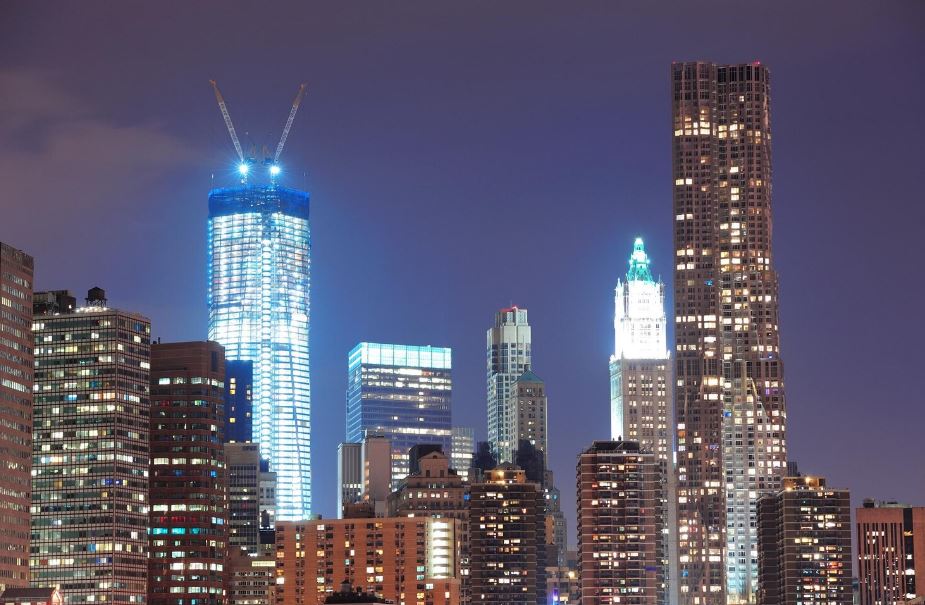
You can physically sense this when you walk through some of the Financial District’s blocks. Some towers are humming with foot traffic, with lobby turnstiles clicking and ground floor coffee shops bustling at noon. Others feel more subdued than they ought to be on a Tuesday afternoon, with an excessive amount of light streaming in through windows where no one is seated. The buildings that are falling behind are the older ones, those whose renovation costs would exceed their market value.
On the other side of this equation, some developers and landlords are placing startling bets. The development of JPMorgan Chase’s new headquarters at 270 Park Avenue cost about $4 billion, or $1,600 per square foot. According to reports, a building rising at 343 Madison is anticipated to cost at least $2,000 per square foot. These are not defensive actions.
They are affirmations that there is a real flight to quality and that businesses who are prepared to pay will find tenants who will comply. They might be correct. Additionally, they might be preparing for a corporate culture that is still in the middle of transition and could end up somewhere different than anyone currently anticipates.
It’s becoming more and more obvious that the long-held beliefs that businesses always increase the size of their offices and that low-cost debt would keep the math going forever have not only been questioned. They’ve been taken apart. The structures that were meant to create wealth for future generations are now raising concerns about what to do with them.
A few are being transformed into apartments. In the Financial District, a former JPMorgan Chase office tower was converted into 1,320 residential units as part of the 25 Water Street project, the largest such conversion in American history. Others are being detained, discreetly recorded, and returned to lenders.
It’s difficult not to wonder how many more of these transactions are currently sitting in loan portfolios, undiscovered and unreported, trophy assets subtly turning into something far less than that.
