



A hurricane or a port attack garner more media attention than the Panama Canal. It is a tiny stretch of water between two oceans that prevents container ships from going around South America to get from the Pacific to the Atlantic. It hums along in the background of global trade, handling about three to five percent of international marine commerce on any given day. In Georgia or New Jersey, most people don’t give it any thought. Until prices begin to fluctuate.
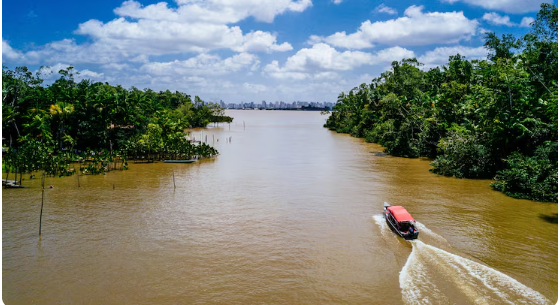
Water powers the canal. In particular, it operates on Gatún Lake, an artificial reservoir that supplies the lock system that permits ships to be raised and lowered between sea levels. The Autoridad del Canal de Panamá limits how many ships can pass through each day and how heavily loaded those ships can be when that lake drops—during droughts, El Niño years, and the kind of prolonged dry spells that climate forecasts presently say will grow more frequent. lengthier wait periods, lower payload, and fewer ships. The disruption’s math spreads swiftly throughout supply chains.
The drought of 2023 was instructional. When Gatún Lake’s water levels dropped to their lowest point in decades, the canal administration implemented restrictions that made cargo companies reroute or wait in enormous lines. A few ships opted for the more circuitous route around Cape Horn. In order to advance in line, others paid higher fees. In any case, those expenses left Panama. They traveled in the form of freight rates, which appeared in import charges, shipping bills, and ultimately shop shelf pricing. Despite being indirect, the relationship is genuine.
According to new climate modeling, minimum annual lake levels are predicted to significantly decrease for the remainder of the twenty-first century, based on statistically downscaled projections under higher emissions paths. Wet season rainfall, which is the concentrated time when Central America receives the majority of its yearly precipitation and when Gatún Lake is expected to be replenishing, is the main cause rather than a drop in total rainfall. The buffer that keeps the canal running during dry months becomes thinner if wet seasons become shorter, more erratic, or bring less rain when they do arrive.
Scientists are cautious to note that there is real uncertainty in the forecasts. Rainfall in Central America is impacted by El Niño cycles in ways that are still challenging to accurately model. Panama is located in an area where the models don’t quite agree, according to NOAA’s own climate scientists. While continuing to invest in water management infrastructure, such as larger water-saving basins, alternate reservoir connections, and operational modifications, canal authorities have acknowledged this unpredictability and expect that this will maintain constant transit numbers even as circumstances change.
It’s unclear if those modifications will be sufficient. The shipping industry is starting to price that risk into its planning in ways it didn’t five years ago, and it appears more apparent that the window of comfortable operating margin at Gatún Lake is closing. The canal is the favored route for American importers who depend on east coast ports to receive commodities delivered from Asia, such as electronics, apparel, and manufacturing components. Weeks are saved. Fuel is saved. Additionally, those savings vanish and are replaced by something else when it slows down.
Economic data typically reveals climate change before public discourse does. One location where the relationship between emissions, weather patterns, and consumer costs is remarkably direct is the Panama Canal. Gatún Lake’s water level is below normal. That isn’t an ethereal environmental issue. It’s a logistical issue that culminates at the register.
