



The fortune cookie, a treat based on the notion of hidden truths wrapped in a mystery of its own making, has an almost poetic quality. At the conclusion of a Chinese restaurant meal, the majority of Americans open one without much consideration for its origins. The presumption is clear: since the food is Chinese, the cookie must also be Chinese. As it happens, that assumption is nearly totally incorrect.
It’s not a Chinese fortune cookie. In its original form, it hardly qualifies as a restaurant. The tsujiura senbei, a folded rice cracker with a slip of paper tucked inside its bend, was first sold in tiny confectionery stores close to Shinto shrines in Kyoto, Japan, in the 1870s. In the late 1990s, researcher Yasuko Nakamachi discovered storybooks from 1878 depicting an apprentice baking these cookies and discovered that they were still being made at a generations-old family bakery close to Kyoto. Most historical food claims would be envious of that paper trail.
Compared to the modern American version, the Japanese version was bigger and darker. Instead of the vanilla and butter that characterize modern cookies, it was flavored with sesame and miso. However, the idea—a folded, baked wafer with a message inside—was clearly the same. Perhaps the symbolism was as important as the flavor. The random fortune slips known as omikuji, which were sold at Japanese temples and shrines, were already ingrained in the culture. It’s possible that the cookie, which is both edible and personal, was a logical continuation of that custom.
Sometime between the 1880s and the early 1900s, Japanese immigrants introduced the concept to California, first settling in Hawaii before moving on to places like Los Angeles and San Francisco. They gradually changed the cookie into something new by opening bakeries and modifying recipes. Makoto Hagiwara, the proprietor of the Japanese Tea Garden in Golden Gate Park, San Francisco, is the name most frequently mentioned in this origin story.
According to reports, he started serving fortune cookies there in the early 1900s, obtaining them from Benkyodo, a nearby bakery. Although not everyone agreed with the decision, a San Francisco court officially sided with Hagiwara in 1983, ending a protracted dispute.
David Jung, the founder of the Hong Kong Noodle Company in Los Angeles, was the other principal claimant. He claimed to have created the cookie in 1918 by stuffing them with passages from the Bible and giving them to jobless men who lived close to his store. The image of a man holding flour and silently giving a few words of hope to random people on the street is powerful. It’s difficult to determine whether that story is entirely true or has been somewhat embellished by time. History has a tendency to soften its own boundaries.
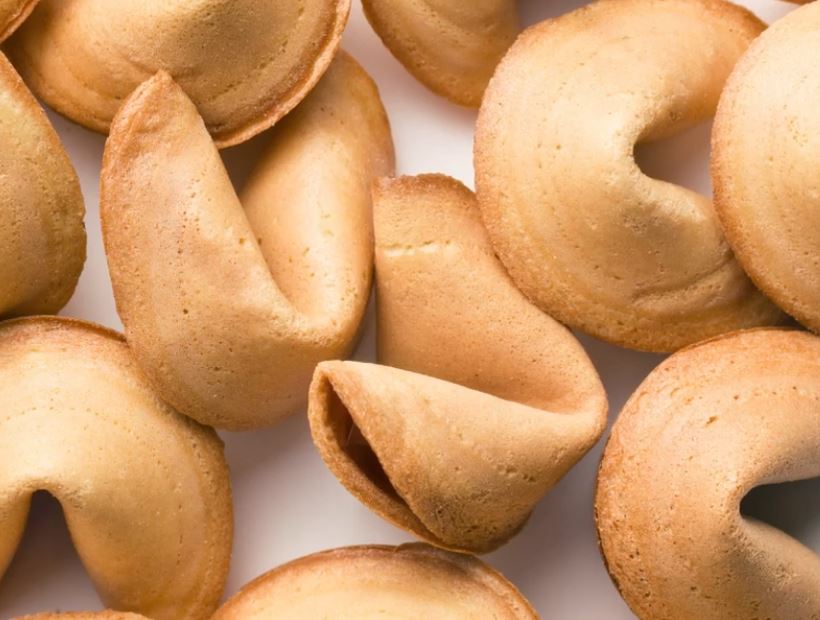
Seiichi Kito of Fugetsu-Do in Little Tokyo, Los Angeles, is a third contender worth mentioning. He sold the cookies to Chinese eateries in both cities, claiming he was directly inspired by Japanese omikuji fortune slips. Even though Kito wasn’t the only inventor, it’s possible that his distribution network is what made the cookie so popular. Seldom are origins that pure.
World War II was the cultural turning point. Fortune cookie makers were among the more than 100,000 Japanese Americans who were interned. Chinese American producers filled the void. The cookie had new owners by the end of the war, and its connection to Chinese eateries was firmly established. The change wasn’t intentional. The evidence was circumstantial. However, decades of assumed Chinese identity obscured the Japanese ancestry.
Approximately three billion fortune cookies are produced annually, the majority of which are consumed in the US. Over 4.5 million are produced daily by Brooklyn’s largest manufacturer, Wonton Food Inc. In just a few seconds, machines fold, fill, and cool each one. That industrial revolution began with Edward Louie’s fortune-inserting machine in 1974, and fully automated production was achieved by 1980.
In all of this, it’s difficult not to find something subtly ironic: a cookie that is praised for its hidden wisdom and has a past that most people are unaware of. Something ambiguous about the future may be revealed by the fortune inside. If the cookie could speak, it would have a fascinating backstory.
