


Neither a quarterly earnings call nor a boardroom announcement was the first indication that something was actually wrong. The comment sections are where it originated. By the end of 2024, replies to influencers who shared images of luxury purchases and far-off vacations on Instagram and TikTok were flattened, not because they were phony but rather because they were tone deaf. The audience was no longer the same. And slowly but clearly, the ad dollars started to come in.
Social media advertising relied on a sort of shared faith for more than ten years. Brands thought that conversions would occur where the eyeballs were. It seemed to be supported by the numbers. However, data from the last eighteen months reveals a different picture, one that many marketing executives are quietly uneasy about.
Instagram’s engagement rate has decreased by about 67% since the beginning of 2024, to about 1.16%, the lowest of any major platform. Over the same period, brand content engagement on TikTok, which gained notoriety for its remarkable organic reach and creator-driven virality, decreased from 5.69% to roughly 2.63%. These are not small dips. The trajectory is difficult to explain away for platforms that have been marketing themselves as the most effective attention-capture devices ever created.
Beneath the numbers, there is a more significant cultural shift that merits consideration. According to a 2025 Deloitte survey, almost 25% of adults had removed at least one social media app in the previous 12 months; among Gen Z, this percentage increased to about a third. These are the same individuals that brands have been actively pursuing. In response, the platforms flooded feeds with algorithmically amplified noise and AI-generated content, which worsened the experience for actual users while maintaining engagement metrics. Advertisers are beginning to price in this slow-motion credibility issue.
Budgets for marketing are already changing. Influencer Marketing Hub reports that between 2024 and 2025, the percentage of brands allocating ad funds to online creators decreased by almost 10 percentage points. Campaign sizes have also decreased; whereas a mid-sized brand may have collaborated with more than twenty creators on a single push, many now use just one. Once thought to be virtually recession-proof, the influencer economy is now realizing that it isn’t. Consumers and brands are becoming more cautious, skeptical, and significantly less inclined to spend money on aspirational content that doesn’t feel authentic due to recession anxiety.
An overdue reckoning with waste is part of what’s taking place. Up to 30% of social ad budgets are thought to have been lost due to bot traffic, poorly targeted ads, and non-performing impressions. On these platforms, advertising expenses continued to rise while conversion efficiency steadily declined. CPMs went up. The amount of attention per impression decreased. For an increasing number of brands, there is a point at which the math just doesn’t work.
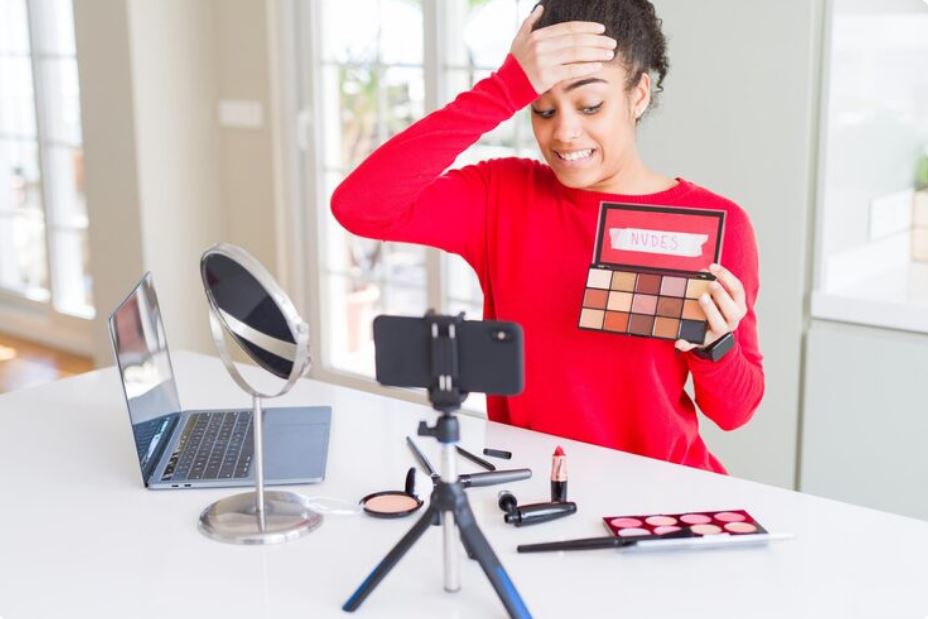
Where some of that money is going is a topic of less discussion. What the industry refers to as the “open internet”—news websites, editorial platforms, and content hubs where users actively search for something rather than passively scrolling—is gaining popularity again. According to reports, 37% of consumers recall brands from online news and magazine placements, while only about 25% do so from social media. The $220 billion social advertising market may have been over-indexed on platforms that are more adept at making impressions than memories. For years, the industry chose not to look too closely at that important distinction.
It seems like the industry is at last posing more challenging queries. It’s not just about where to put money; it’s about what it really means to get someone’s attention instead of interrupting them. Volume and targeting accuracy were the cornerstones of the platforms’ value proposition. However, if a significant percentage of younger users have already trained themselves to ignore your advertisement in 1.3 seconds, it doesn’t matter how precisely you target them. Before the message has a chance, the focus is diverted.
It is still genuinely unclear what will happen next. Certain brands will drastically retreat. Others will continue in the hopes that the platforms will figure out a way to improve the experience. Some will attempt to be creative and invest in engaging content instead of purchasing it. However, it appears that the days of believing that a TikTok or Instagram placement will inevitably result in impact are coming to an end. Silently, and then suddenly.
