



If you look for a short-term rental in Manhattan today, the map on Airbnb’s website is almost embarrassingly sparse. There were thousands of pins in every neighborhood, from Tribeca to Harlem, a few years ago. The map now appears to be from a different city, one that is quieter, more regulated, and unquestionably less profitable. It’s not a coincidence. It is the outcome of one of the most successful regulatory campaigns against a tech platform that any city has ever carried out.
Airbnb was not officially prohibited when New York’s Local Law 18 went into full effect in September 2023. It may have been more successful in what it accomplished. It limited occupancy to two people, prohibited platforms from processing payments for unregistered listings, required hosts to register with the city, and required them to be physically present during any guest stay. The great majority of Airbnb’s inventory in New York, including entire apartments, host-absent properties, and multiple guests, were unable to withstand those circumstances. Short-term listings under 30 nights fell from about 21,900 to about 3,700 in less than a year. Without a single outright ban, that represents an 83% decrease.
As one might anticipate, Airbnb retaliated. Before enforcement even started, the company filed a lawsuit against the city, citing four legal grounds, including federal preemption and arbitrary rulemaking. In August 2023, a judge of the New York State Supreme Court dismissed all of them, calling the regulations “entirely rational.” At Airbnb’s San Francisco headquarters, that statement likely hurts more than the decision itself. When a legal loss is presented in that way, it is difficult to create a compassionate public narrative.
The stakes were real in terms of money. Airbnb claimed in its own court documents that the law would eliminate roughly 95% of its yearly revenue in New York City, which it estimated to be around $85 million. These figures were provided by Airbnb to a judge who had previously sided with the city. The money was substantial. As it happened, the leverage was not.
The fact that Airbnb’s own commissioned research unexpectedly undermined its public argument is what makes this particularly unsettling for the company. Prior to Local Law 18, Airbnb listings accounted for less than 1% of New York’s total housing supply, according to a study it funded. The city’s main argument that short-term rentals were significantly raising rents appears more difficult to support if that is the case, and Airbnb was the one who stated it. Following the crackdown, vacancy rates remained unchanged.
Rents continued to rise. Some of the city’s fastest rent increases occurred in the areas that formerly had the highest concentration of Airbnb. The reasoning behind the ban was not supported by any of that. However, a study funded by the defendant does not alter policy; it is dismissed as self-interest, and the law remains unchanged.
London chose a different course, but the impact on hosts has been equally limiting. The city implemented a rule in 2015 that set a cap of 90 days per year for entire-home rentals. If you go over that limit, you’ll need formal planning permission, which is something that few casual landlords bother with. Although the 90-day cap was presented as a fair compromise, it has actually accomplished something significant: it has maintained a limit on how profitable London Airbnb hosting can actually be. You are able to augment your earnings. Most likely, you are incapable of starting a business.
When taken as a whole, these two cities symbolize something more than regional policy disputes. Among Airbnb’s most well-known markets worldwide are New York and London; these are the cities whose names are significant in business presentations, investor calls, and brand perception. The impact goes far beyond the money lost in those zip codes when those cities successfully push the platform to the periphery.
This is a structural issue that Airbnb has never been able to fully resolve. With inventory it doesn’t own and regulations it doesn’t write, the company created a massive marketplace. There were no hotels to construct, no employees to hire, and no properties to maintain for years, which seemed like a brilliant idea. On the other hand, not owning anything means you have no control over its availability.
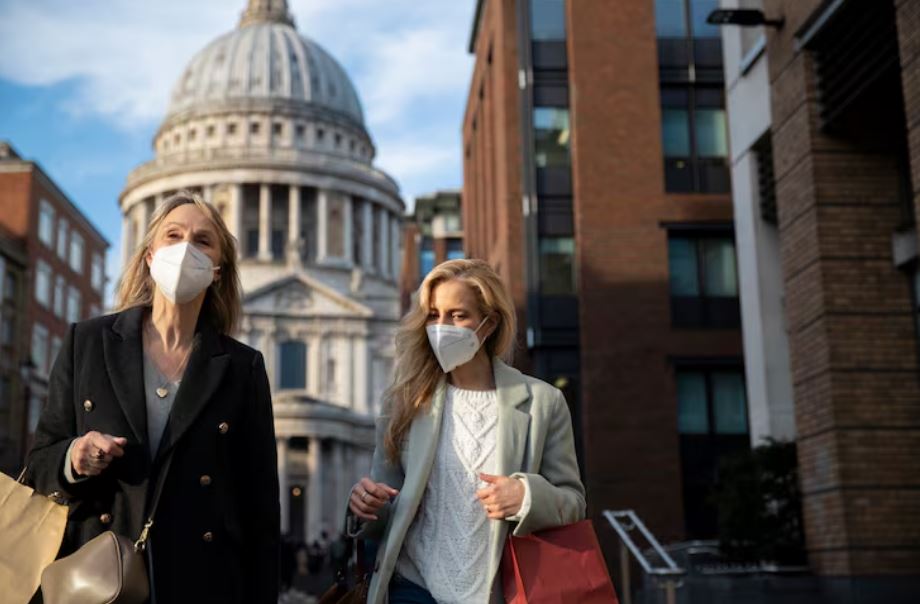
Airbnb rarely moves when a city determines that its apartments are for housing rather than lodging. It is capable of litigation. It has lobbying power. Reports can be commissioned by it. None of those three options altered the result when they were used in New York.
Whether other cities will adopt New York’s model or opt for more lax policies like London’s is still up in the air. By 2028, Barcelona will have zero licensed short-term rentals, making New York’s crackdown seem insignificant. In 2024, Edinburgh implemented a tourist tax. Since 2021, Lisbon and Porto have imposed restrictions on new licenses. There is no subtlety to the direction.
There isn’t a wave of cities acting irrationally against a profitable tech company. Housing politics colliding with a platform that built its growth on the presumption that local regulations would either remain permissive or be slow enough to be circumvented is something more commonplace and resilient. In city after city, that presumption is proving to be incorrect.
